Moringa oleifera leaf powder has gained popularity as a nutrient-dense food ingredient rich in vitamins, minerals, and polyphenols such as quercetin and chlorogenic acid. While food-grade leaf preparations are generally well-tolerated as a dietary component, the safety profile changes significantly when considering concentrated extracts or other parts of the plant — particularly the root and bark — during pregnancy.
Traditional medicine systems have long used moringa root and bark preparations for their uterine-stimulant properties, a use that aligns with experimental findings in animal models. The U.S. FDA has not evaluated moringa leaf powder for safety or efficacy as a dietary supplement, and pregnant individuals are advised to avoid concentrated extracts and root or bark preparations entirely due to documented effects on reproductive tissue.
Key Takeaways
- Moringa leaf powder and root/bark extracts have fundamentally different phytochemical profiles and cannot be assumed to share the same safety profile during pregnancy.
- Animal studies demonstrate that aqueous moringa root extract alters uterine histoarchitecture during pre- and post-implantation periods and affects genital tract tissue in ovariectomized rats [1][2].
- Contemporary research shows moringa root constituents can modulate reproductive hormone receptor pathways (FSHR–c-Myc axis) in a cancer model [3], providing mechanistic support for traditional uterine-stimulant use.
- The FDA has not evaluated moringa leaf powder for safety or efficacy as a dietary supplement; no clinical trials establish safety of any moringa preparation during human pregnancy.
- Pregnant individuals should avoid moringa root, bark, and concentrated extracts entirely; culinary use of leaf powder should be discussed with a healthcare provider.
Leaf Powder Versus Root Extract: Different Plant Parts, Different Risk Profiles
Moringa leaf powder is produced by drying and grinding the leaves of the fast-growing tropical tree. It serves as a food ingredient providing vitamin A, vitamin C, calcium, potassium, and plant compounds including quercetin and chlorogenic acid. The proposed mechanisms for its general health effects center on antioxidant and mild anti-inflammatory activity from these polyphenols rather than a single drug-like active compound. As a whole-food powder, it has a long history of culinary use in many tropical regions.
In contrast, moringa root and bark contain distinct phytochemical profiles that include vermifuge alkaloids and other compounds not present in significant amounts in the leaves. Traditional medicine documents the use of root and bark preparations specifically as uterine stimulants. This fundamental difference in chemical composition means that safety data for leaf powder cannot be extrapolated to root or bark extracts, and vice versa. The risk profile for each plant part must be evaluated independently.

Animal Research on Moringa Root Extract and Uterine Histoarchitecture
Two foundational studies in rats examined the effects of aqueous moringa root extract on uterine tissue during critical reproductive windows. In a 1987 study, researchers administered aqueous extract of Moringa oleifera Lam to rats during pre- and post-implantation periods and observed alterations in uterine histoarchitecture [1]. The findings indicated that root extract exposure during these sensitive periods produced measurable changes in uterine structure.
A subsequent 1989 study extended this work by evaluating the histoarchitecture of the genital tract in ovariectomized rats treated with aqueous moringa root extract [2]. The use of ovariectomized animals allowed researchers to isolate the direct effects of the root extract on reproductive tissue from the confounding influence of endogenous ovarian hormones. Together, these studies provide experimental evidence that moringa root extract can modify uterine architecture in rodent models, supporting the traditional classification of root preparations as uterine stimulants.
Mechanistic Insights from Contemporary Root Research
A 2021 study investigated a nano-formulated triglyceride preparation of moringa root in a model of epithelial ovarian cancer, reporting inhibitory effects through attenuation of the FSHR–c-Myc signaling axis [3]. While this research focused on a cancer model rather than pregnancy, it demonstrates that moringa root constituents can interact with reproductive hormone receptor pathways — specifically the follicle-stimulating hormone receptor (FSHR) — at a molecular level. This mechanistic finding adds a layer of biological plausibility to the observed uterine effects in the earlier histoarchitecture studies.

It is important to note that this 2021 study used a specialized nano-triglyceride delivery system designed for targeted cancer therapy, not a conventional root extract. The results cannot be directly translated to dietary exposure scenarios. However, they underscore that moringa root contains bioactive compounds capable of modulating reproductive tissue signaling pathways, reinforcing the distinction between root and leaf preparations.
Why the Leaf–Root Distinction Matters for Pregnancy
The animal data on root extract — showing uterine histoarchitectural changes during pre- and post-implantation periods [1] and direct effects on genital tract tissue in hormone-depleted models [2] — provide a scientific basis for the traditional contraindication of root and bark during pregnancy. These findings are consistent with the documented ethnomedical use of moringa root as a uterine stimulant.
No comparable animal or human studies have demonstrated similar uterine effects from food-grade moringa leaf powder. The leaf lacks the alkaloid profile associated with root and bark, and its primary bioactives are antioxidant polyphenols. However, the absence of evidence for harm is not equivalent to evidence of safety for concentrated leaf extracts during pregnancy. The FDA has not evaluated moringa leaf powder as a supplement, and clinical data in pregnant populations are lacking. The prudent approach distinguishes between culinary use of leaf powder and any concentrated extract or root/bark product.
Regulatory Status and Practical Guidance
In the United States, moringa leaf powder is sold as a food ingredient or dietary supplement. The FDA has not evaluated it for safety or efficacy as a supplement, meaning manufacturers are responsible for ensuring their products are safe and properly labeled, but no pre-market approval process exists. This regulatory framework places the burden on consumers and healthcare providers to assess risk based on available evidence.

Given the animal evidence for root extract effects on uterine tissue [1][2] and the mechanistic data showing root interaction with reproductive hormone pathways [3], pregnant individuals should avoid moringa root, bark, and any concentrated extracts derived from these parts. Food-grade leaf powder used in typical culinary amounts has a different risk profile, but pregnant individuals should consult a qualified healthcare provider before using any moringa product, including leaf powder supplements, to evaluate individual circumstances and potential interactions.
🛒 Where to Buy Moringa (Moringa oleifera)
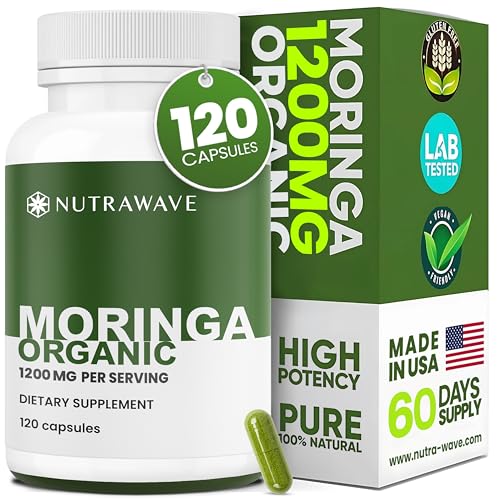
- CleanseParasites Intra-Cellular Superfood Editor’s Pick
Contains moringa leaf alongside sea moss, bladderwrack, black cumin seed, and other superfood ingredients. - Kuli Kuli Organic Moringa Powder
powder, 1 tsp (3g) — USDA organic, direct-sourced from smallholder farmers across Africa and India - Nature’s Way Moringa Leaf Capsules
capsules, 2 capsules (960mg) — Widely available mainstream supplement brand, whole-leaf capsules - Micro Ingredients Organic Moringa Leaf Powder
powder, 1 tsp (5g) — Budget-friendly bulk organic powder, third-party tested - Zint Moringa Leaf Powder
powder, 1 tbsp (7g) — Sourced from India, popular smoothie-add powder
As an Amazon Associate we earn from qualifying purchases. Quality varies widely — always choose a product with a published third-party test (COA) before buying.
A Note on the Evidence
The cited evidence derives from rodent studies and a cellular cancer model; no human pregnancy data exist. Moringa leaf powder as a food differs from concentrated extracts. Pregnant individuals, those trying to conceive, and anyone with a hormone-sensitive condition should consult a healthcare provider before using any moringa product.

Frequently Asked Questions
Is moringa leaf powder safe during pregnancy?
Food-grade moringa leaf powder has a long history of culinary use and a different phytochemical profile than root or bark. However, the FDA has not evaluated it for safety as a supplement, and no clinical trials establish its safety during human pregnancy. Consult your healthcare provider before using any moringa product while pregnant.
Why is moringa root considered unsafe during pregnancy?
Animal studies show that aqueous moringa root extract alters uterine histoarchitecture during pre- and post-implantation periods in rats [1] and produces direct effects on genital tract tissue even in the absence of ovarian hormones [2]. These findings align with traditional use of root as a uterine stimulant.
Can I take moringa leaf supplements instead of root during pregnancy?
Leaf powder lacks the alkaloids found in root and bark, but concentrated leaf supplements have not been studied in pregnancy. The absence of root-specific compounds does not guarantee safety of high-dose leaf extracts. Discuss any supplement use with your prenatal care provider.
What compounds in moringa root cause uterine effects?
Moringa root and bark contain vermifuge alkaloids and other compounds not prevalent in leaves. A 2021 study found a nano-formulated root preparation modulated the FSHR–c-Myc signaling pathway in ovarian cancer cells [3], indicating root constituents can interact with reproductive hormone pathways.
Are there human studies on moringa and pregnancy outcomes?
No. The available evidence comes from rodent histoarchitecture studies [1][2] and a mechanistic cancer study [3]. There are no controlled human trials evaluating moringa leaf powder, root extract, or any moringa preparation on pregnancy outcomes.
What should I do if I've been taking moringa and discover I'm pregnant?
Discontinue any moringa root, bark, or concentrated extract products immediately. Inform your healthcare provider about any moringa leaf powder use so they can assess your specific situation. This article provides information, not medical advice; individual guidance requires a qualified clinician.
References
- Prakash AO et al. Uterine histoarchitecture during pre and post-implantation periods of rats treated with aqueous extract of Moringa oleifera Lam. Acta Europaea fertilitatis (1987). PMID 3630576
- Shukla S et al. Histoarchitecture of the genital tract of ovariectomized rats treated with an aqueous extract of Moringa oleifera roots. Journal of ethnopharmacology (1989). PMID 2747260
- Ghosh A et al. Inhibitory role of a smart nano-trifattyglyceride of Moringa oleifera root in epithelial ovarian cancer, through attenuation of FSHR – c-Myc axis. Journal of traditional and complementary medicine (2021). PMID 34765512
These statements have not been evaluated by the Food and Drug Administration. This information is not intended to diagnose, treat, cure, or prevent any disease. Content is for informational purposes only and is not medical advice; consult a qualified healthcare provider before starting any supplement. As an Amazon Associate we earn from qualifying purchases.
