Moringa oleifera leaf powder has a reputation as a gentle, food-based supplement, and for most healthy adults using modest amounts of leaf preparations, that reputation is broadly supported by the available data. But ‘generally well-tolerated’ is not the same as ‘risk-free,’ and moringa’s side-effect profile depends heavily on which part of the plant is used, how much is consumed, and who is consuming it.
This article walks through what’s actually documented about moringa’s safety, where the evidence is thin, and which groups of people have a clear reason to be cautious or avoid it altogether. None of this is medical advice, and anyone taking medications or managing a health condition should talk to a clinician before adding moringa to their routine.
Key Takeaways
- Food-grade moringa leaf powder is generally well-tolerated at typical doses, with mild GI upset being the most commonly reported issue.
- Moringa root and bark are a different risk category than leaf, containing compounds with documented uterine-stimulant use in traditional medicine; pregnant individuals should avoid these preparations and concentrated extracts.
- Animal toxicology studies show dose-dependent effects at higher intakes, more is not automatically safer.
- People on insulin, diabetes medications, or thyroid medications should coordinate with their prescriber before adding moringa due to potential interactions.
- Combination supplements muddy the picture, side effects may come from other ingredients, not moringa itself.
The Basic Safety Picture for Moringa Leaf
A 2015 review of moringa’s safety and efficacy concluded that food-grade preparations of the leaf, at commonly used doses, have a relatively favorable tolerability profile compared to many botanical supplements [1]. This aligns with moringa’s long history as a food source in South Asia and parts of Africa, where the leaves are cooked and eaten much like other leafy greens.
More recent comprehensive reviews of moringa’s pharmacology and toxicology reach a similar conclusion: at typical supplemental doses, reported adverse effects are usually mild and gastrointestinal in nature, such as stomach upset, gas, or loose stools, particularly when starting the supplement or taking it on an empty stomach [2] [3]. These reviews also emphasize that the plant’s different parts (leaf, seed, root, bark) have distinct chemical profiles and should not be treated as equally safe.

Root and Bark Are a Different Risk Category Than Leaf
One of the most important distinctions in moringa safety is which part of the plant is being used. Leaf powder is the form most commonly sold as a food supplement, but moringa root and bark preparations contain vermifuge alkaloids and other compounds with a documented history of use as uterine stimulants in traditional medicine [4].
A review of traditional medicinal plant use during pregnancy specifically flags moringa root and bark extracts as preparations to avoid, given their documented oxytocic (labor-inducing) activity in traditional use [4]. This risk does not appear to extend to typical food-grade leaf powder in the same way, but the distinction matters enormously: a product labeled simply ‘moringa’ without specifying leaf-only sourcing leaves the buyer unable to assess this risk.
What Animal Toxicology Studies Show About Higher Doses
Because human trials of moringa are generally small and short in duration, much of what’s known about dose-related toxicity comes from animal studies. A 2024 study giving Sprague-Dawley rats single oral doses of a moringa leaf extract, up to 5,000 mg/kg, found no acute toxicity [5].
Similarly, a 13-week repeated-dose toxicity study of an optimized aqueous moringa leaf extract in mice was designed specifically to characterize a no-observed-adverse-effect level (NOAEL) over a longer exposure window than most human trials use [6]. Studies like this exist precisely because chronic, high-dose safety data in humans is limited, findings in animals at high doses don’t necessarily translate directly to humans at typical supplement doses, but they’re a signal that ‘more is better’ is not a safe assumption with moringa any more than with most concentrated plant extracts.

An earlier overview of moringa’s traditional and modern uses likewise notes that most of the plant’s long history of food use involved cooked leaves in moderate culinary amounts, not concentrated encapsulated extracts taken daily over long periods, a distinction worth keeping in mind when comparing ‘traditional safety’ to supplement-level dosing [7].
Interactions to Watch: Blood Sugar and Thyroid Medications
Moringa leaf has been studied for its potential effects on blood glucose, with a review of the evidence describing modest glycemic effects in some trials, generally attributed to compounds that may influence insulin sensitivity or carbohydrate absorption [8]. For most people this is framed as a potential benefit, but anyone taking insulin or oral diabetes medications should be aware that combining moringa with glucose-lowering drugs could theoretically compound their effects, which is a reason to monitor blood sugar closely and loop in a physician rather than adjust medication independently.
A separate clinical study looked at moringa leaf preparation (Barg-e-Sahajna) in people with primary hypothyroidism and found it did not meaningfully worsen thyroid status in that setting, though this was a single study in a specific population and shouldn’t be read as a blanket clearance for everyone on thyroid medication [9]. Anyone on levothyroxine or other thyroid medications should still discuss timing and monitoring with their prescriber before adding moringa, since spacing matters for many supplements taken alongside thyroid drugs.
Moringa in Combination Products
Moringa is increasingly sold as one ingredient in multi-ingredient weight-management or metabolic-support formulas rather than as a standalone leaf powder. A trial evaluating a sustained-release supplement combining banaba, moringa oleifera, green coffee bean extract, and vitamin D3 reported an acceptable safety profile over the study period [10].

The catch with combination products is that side effects can’t be cleanly attributed to moringa alone, if gastrointestinal upset, jitteriness, or blood-sugar changes occur, it may be the caffeine-containing green coffee extract, an interacting ingredient, or moringa itself. Anyone with a known sensitivity or a condition affected by any single ingredient in a blend should read the full label rather than assuming ‘moringa’ is the only active component to worry about.
Who Should Be Cautious or Avoid Moringa
Based on the evidence above, several groups warrant particular caution. Pregnant individuals should avoid concentrated moringa extracts and root or bark preparations specifically, given their documented traditional use as uterine stimulants [4]; food-grade cooked leaf in typical culinary amounts is a different exposure than a concentrated supplement, but this is exactly the kind of judgment call that belongs to a treating clinician, not a product label.
People taking insulin, sulfonylureas, or other glucose-lowering medications should monitor for additive effects given moringa’s studied influence on blood sugar [8]. People on thyroid medication should coordinate timing and monitoring with their prescriber [9]. And anyone considering long-term, high-dose use, well beyond typical serving sizes, should recognize that the chronic toxicology data mostly comes from animal studies at doses designed to find a ceiling, not confirm a large margin of safety at high human intake [5] [6].
🛒 Where to Buy Moringa (Moringa oleifera)
- CleanseParasites Intra-Cellular Superfood Editor’s Pick
Contains moringa leaf alongside sea moss, bladderwrack, black cumin seed, and other superfood ingredients. - Kuli Kuli Organic Moringa Powder
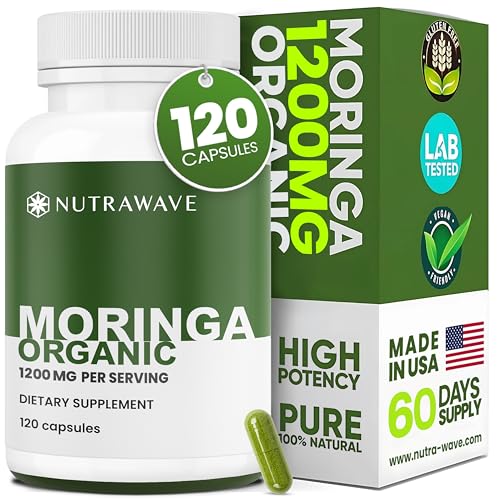
powder, 1 tsp (3g) — USDA organic, direct-sourced from smallholder farmers across Africa and India - Nature’s Way Moringa Leaf Capsules
capsules, 2 capsules (960mg) — Widely available mainstream supplement brand, whole-leaf capsules - Micro Ingredients Organic Moringa Leaf Powder
powder, 1 tsp (5g) — Budget-friendly bulk organic powder, third-party tested - Zint Moringa Leaf Powder
powder, 1 tbsp (7g) — Sourced from India, popular smoothie-add powder
As an Amazon Associate we earn from qualifying purchases. Quality varies widely — always choose a product with a published third-party test (COA) before buying.

A Note on the Evidence
Much of the human research on moringa involves small, short-term studies, and long-term high-dose safety data mostly comes from animal toxicology work. This article is informational, not medical advice, anyone pregnant, on medication, or managing a chronic condition should consult a physician before starting moringa.
Frequently Asked Questions
Is moringa leaf powder safe for daily use?
For most healthy adults, typical culinary or supplemental doses of moringa leaf appear generally well-tolerated based on available reviews [1] [2]. Long-term, high-dose daily use has less human safety data behind it, so moderation and periodic breaks are reasonable.
Can pregnant women take moringa?
Root and bark preparations and concentrated extracts should be avoided during pregnancy due to documented traditional use as uterine stimulants [4]. Anyone pregnant or trying to conceive should talk to their doctor before using any moringa product.
Does moringa interact with diabetes medication?
Moringa leaf has been studied for effects on blood glucose and may have a modest glucose-lowering effect in some studies [8]. Combined with insulin or other glucose-lowering drugs, this could theoretically increase the risk of low blood sugar, so monitoring and medical guidance are important.
Is moringa safe with thyroid medication?
One clinical study in people with primary hypothyroidism did not find that moringa leaf preparation worsened thyroid status [9], but this was a limited study and doesn’t rule out interactions for everyone. People on thyroid medication should check with their prescriber about timing and monitoring.
What are the most common moringa side effects?
The most frequently reported issues are mild digestive symptoms such as stomach upset, gas, or loose stools, especially when starting moringa or taking larger amounts [2] [3].
Are moringa supplements regulated for safety by the FDA?
No. The FDA has not evaluated moringa leaf powder supplements for safety or efficacy the way it does prescription drugs. Quality, dosing accuracy, and plant-part labeling can vary between brands, which is itself a safety consideration.
References
- Stohs SJ et al. Review of the Safety and Efficacy of Moringa oleifera. Phytotherapy research : PTR (2015). PMID 25808883
- Pareek A et al. Moringa oleifera: An Updated Comprehensive Review of Its Pharmacological Activities, Ethnomedicinal, Phytopharmaceutical Formulation, Clinical, Phytochemical, and Toxicological Aspects. International journal of molecular sciences (2023). PMID 36768420
- Liu R et al. Moringa oleifera: a systematic review of its botany, traditional uses, phytochemistry, pharmacology and toxicity. The Journal of pharmacy and pharmacology (2022). PMID 34718669
- Bernstein N et al. Is it safe to consume traditional medicinal plants during pregnancy?. Phytotherapy research : PTR (2021). PMID 33164294
- Kambuno NT et al. In vivo toxicity study in Sprague-Dawley rats receiving different doses of Moringa oleifera extract. Open veterinary journal (2024). PMID 39553766
- Galvão Silva NR et al. 13-Week repeated-dose toxicity study of optimized aqueous extract of Moringa oleifera leaves in mice. Journal of ethnopharmacology (2024). PMID 39097212
- et al. Moringa. (2006). PMID 30000959
- Ahmad J et al. Moringa oleifera and glycemic control: A review of current evidence and possible mechanisms. Phytotherapy research : PTR (2019). PMID 31429148
- Alam MA et al. Efficacy and safety of Barg-e-Sahajna (Moringa oleifera Lam.) in primary hypothyroidism. Drug metabolism and personalized therapy (2021). PMID 34449175
- Stohs SJ et al. Safety and Efficacy of Banaba-Moringa oleifera-Green Coffee Bean Extracts and Vitamin D3 in a Sustained Release Weight Management Supplement. Phytotherapy research : PTR (2016). PMID 26871553
These statements have not been evaluated by the Food and Drug Administration. This information is not intended to diagnose, treat, cure, or prevent any disease. Content is for informational purposes only and is not medical advice; consult a qualified healthcare provider before starting any supplement. As an Amazon Associate we earn from qualifying purchases.
