Moringa oleifera, sometimes called the drumstick tree, is a fast-growing tropical plant whose dried, powdered leaves have become a popular addition to smoothies and supplements. Marketing copy often calls it ‘anti-inflammatory,’ but that phrase gets used loosely across the supplement world. This article looks at what the actual research says, where it comes from, and how far those findings can honestly be extended to a person drinking moringa tea or taking a capsule.
The short version: there is a real and growing body of laboratory and animal research suggesting moringa extracts can reduce markers of inflammation in specific, controlled conditions. What’s missing is large-scale human clinical evidence. This is informational content, not medical advice, and none of it should replace a conversation with a doctor about a specific health condition.
Key Takeaways
- Moringa’s anti-inflammatory activity is best supported in cell-culture and animal studies, particularly for gut inflammation, skin conditions, and metabolic tissue damage [1][2][3][4]
- A 2025 umbrella review of 26 systematic reviews found a consistent preclinical signal but the evidence base still lacks robust human clinical trials [5]
- The proposed mechanism centers on antioxidant polyphenols like quercetin and chlorogenic acid rather than a single targeted drug-like compound
- Food-grade moringa leaf powder is generally well-tolerated, but root and bark preparations carry a distinct, higher-risk profile and should be avoided, especially during pregnancy
- The FDA has not evaluated moringa leaf powder for safety or efficacy as a supplement; this research is informative, not a substitute for medical care
The Proposed Mechanism: Why Moringa Might Calm Inflammation
Moringa leaves are dense in vitamins A and C, calcium, potassium, and a range of plant polyphenols, including quercetin and chlorogenic acid. Unlike a pharmaceutical anti-inflammatory drug that blocks one specific enzyme, moringa’s proposed effect is thought to come from the combined antioxidant activity of these compounds, which may help neutralize reactive oxygen species and modestly dampen the signaling molecules that drive inflammation.
Lab research testing moringa extracts directly on immune cells has found that bioactive compounds isolated from the plant can inhibit pro-inflammatory mediators in macrophages stimulated with lipopolysaccharide (LPS), a standard way researchers trigger an inflammatory response in a dish [2]. Separate in vitro work assessing crude moringa extract found measurable antioxidant and anti-inflammatory activity as well [6]. These are cell-culture findings, valuable for understanding mechanism, but they are a long way from proving an effect in a living person.

Gut and Digestive Inflammation: The Most-Studied Angle
A meaningful share of moringa’s anti-inflammatory research has focused on the gut, using rodent models of colitis. In one study, moringa seed extract reduced markers of acute colitis induced by acetic acid in rats [1]. A separate rat study using moringa leaf aqueous extract similarly found reduced colon inflammation alongside anxiolytic (anxiety-reducing) effects in the acetic acid colitis model [7].
Moringa leaf extract has also shown a gastroprotective effect in histological studies of the stomach lining, suggesting a possible protective role against gastric irritation [8]. These findings are consistent with each other and support the idea that moringa compounds can modulate gut inflammation in animal models. They do not establish that moringa treats or prevents inflammatory bowel disease in humans, and no one should substitute it for prescribed IBD treatment.
Skin, Wound Healing, and Topical Use
Beyond ingestion, moringa has been studied as a topical application. In a mouse model of atopic dermatitis (a chronic inflammatory skin condition), topical moringa leaf extract helped rebalance the Th1/Th2/Th17 immune signaling pathways implicated in the disease [3]. A separate study of a Moroccan aqueous leaf extract found anti-inflammatory, wound-healing, and anti-granuloma effects when applied topically [9].

Together these point to a plausible role for moringa in topical skin-care formulations aimed at calming inflammatory skin reactions, though this remains preclinical work in animal models rather than confirmed dermatology treatment in humans.
Metabolic and Organ-Level Inflammation
Chronic low-grade inflammation is a feature of metabolic conditions like diabetes, and researchers have tested moringa in that context. In diabetic male Wistar rats, moringa oleifera demonstrated hepatoprotective (liver-protecting), antihyperlipidemic (lipid-lowering), and anti-inflammatory activity against diabetes-induced tissue damage [4].
A separate narrative review has compiled evidence on moringa’s potential protective effects against kidney disease, an organ system where chronic inflammation plays a central role in progressive damage [10]. Moringa seed oil extract has also been evaluated for anti-inflammatory and anticancer activity in a mouse model of Ehrlich ascites carcinoma, a research context where inflammation and tumor growth are closely linked [11]. These are early, disease-model findings, not evidence that moringa treats diabetes, kidney disease, or cancer in people.
What the Broader Evidence Base Actually Says
Individual studies are useful, but the most informative recent evidence is a 2025 umbrella review, a synthesis pulling together 26 separate systematic reviews on moringa oleifera and inflammatory diseases [5]. Umbrella reviews are useful precisely because they sit above individual studies and can flag where the evidence is consistent versus where it’s thin or conflicting.

The overall picture from this body of work is one of consistent signal in preclinical (cell and animal) research across multiple inflammatory contexts: gut, skin, metabolic, and general oxidative-stress models. What’s still largely absent is large, well-controlled human clinical trial data confirming these effects translate to measurable anti-inflammatory benefit in people, at defined doses, over meaningful timeframes.
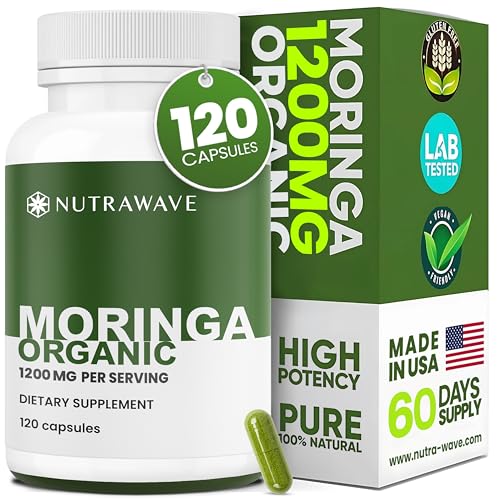
🛒 Where to Buy Moringa (Moringa oleifera)
- CleanseParasites Intra-Cellular Superfood Editor’s Pick
Contains moringa leaf alongside sea moss, bladderwrack, black cumin seed, and other superfood ingredients. - Kuli Kuli Organic Moringa Powder
powder, 1 tsp (3g) — USDA organic, direct-sourced from smallholder farmers across Africa and India - Nature’s Way Moringa Leaf Capsules
capsules, 2 capsules (960mg) — Widely available mainstream supplement brand, whole-leaf capsules - Micro Ingredients Organic Moringa Leaf Powder
powder, 1 tsp (5g) — Budget-friendly bulk organic powder, third-party tested - Zint Moringa Leaf Powder
powder, 1 tbsp (7g) — Sourced from India, popular smoothie-add powder
As an Amazon Associate we earn from qualifying purchases. Quality varies widely — always choose a product with a published third-party test (COA) before buying.
A Note on the Evidence
Nearly all of this evidence comes from animal models, cell cultures, or systematic reviews of that preclinical work, not large human clinical trials, so findings may not translate directly to people. This information is educational, not medical advice; talk to a doctor before using moringa supplements, especially if pregnant, on medication, or managing a chronic condition, and avoid root or bark preparations entirely during pregnancy.

Frequently Asked Questions
Does moringa reduce inflammation in humans?
Most of the direct evidence comes from animal and cell-culture studies showing reduced inflammatory markers in gut, skin, and metabolic models [1][4]. Large human clinical trials confirming this effect are still limited, so it’s more accurate to say moringa shows anti-inflammatory potential in preclinical research than to claim a proven human effect.
What part of the moringa plant has the most anti-inflammatory research?
Leaves and seeds are the most studied parts, appearing in colitis models, macrophage studies, and skin studies [1][2][7]. Root and bark preparations are a separate category with a different, higher-risk safety profile and are not the source of the anti-inflammatory findings discussed here.
Can moringa help with arthritis or joint pain?
None of the cited evidence directly tests moringa in a joint-inflammation or arthritis model. The available research covers gut, skin, liver, and metabolic tissue inflammation [4][10], so claims about joint-specific benefit go beyond what this evidence supports.
Is moringa safe to take daily?
Food-grade leaf powder is generally considered well-tolerated in typical culinary or supplement amounts, but the FDA has not formally evaluated it for safety or efficacy as a supplement. Anyone with a health condition, on medication, or pregnant should check with a doctor first, particularly given the distinct risk profile of root and bark extracts.
Why do root and bark extracts get treated differently from leaf powder?
Root and bark preparations contain compounds, including vermifuge alkaloids, with a documented history of uterine-stimulant use in traditional medicine, which is a materially different risk profile from the leaf. This is a safety distinction independent of the anti-inflammatory research, which focuses primarily on leaf and seed extracts.
Is moringa a proven treatment for any inflammatory disease?
No. The umbrella review of 26 systematic reviews reflects a consistent preclinical signal, not confirmation of clinical efficacy for any specific inflammatory disease [5]. It should be viewed as a research-stage botanical, not a substitute for prescribed treatment.
References
- Minaiyan M et al. Anti-inflammatory effect of Moringa oleifera Lam. seeds on acetic acid-induced acute colitis in rats. Avicenna journal of phytomedicine (2014). PMID 25050310
- Fard MT et al. Bioactive Extract from Moringa oleifera Inhibits the Pro-inflammatory Mediators in Lipopolysaccharide Stimulated Macrophages. Pharmacognosy magazine (2015). PMID 27013794
- Choi EJ et al. Topical application of Moringa oleifera leaf extract ameliorates experimentally induced atopic dermatitis by the regulation of Th1/Th2/Th17 balance. Biomedicine & pharmacotherapy = Biomedecine & pharmacotherapie (2016). PMID 27744247
- Omodanisi EI et al. Hepatoprotective, Antihyperlipidemic, and Anti-inflammatory Activity of Moringa oleifera in Diabetic-induced Damage in Male Wistar Rats. Pharmacognosy research (2017). PMID 28539743
- da Silva Parente TSJ et al. Effect of Moringa oleifera on inflammatory diseases: an umbrella review of 26 systematic reviews. Frontiers in pharmacology (2025). PMID 40458803
- Ramamurthy S et al. Assessing the In Vitro Antioxidant and Anti-inflammatory Activity of Moringa oleifera Crude Extract. The journal of contemporary dental practice (2022). PMID 35945838
- Noubissi PA et al. Anxiolytic and anti-colitis effects of Moringa oleifera leaf-aqueous extract on acetic acid-induced colon inflammation in rat. Biomedicine & pharmacotherapy = Biomedecine & pharmacotherapie (2022). PMID 36067569
- Ijioma SN et al. Histological exhibition of the gastroprotective effect of Moringa oleifera leaf extract. Comparative clinical pathology (2018). PMID 29527150
- Hajar A et al. Phytochemical analysis, anti-inflammatory property, wound-healing, and anti-granuloma effect of Moroccan aqueous leave extract of Moringa oleifera. The Journal of pharmacy and pharmacology (2025). PMID 41187072
- Akter T et al. Prospects for Protective Potential of Moringa oleifera against Kidney Diseases. Plants (Basel, Switzerland) (2021). PMID 34961289
- Aldayel TS et al. Evaluation of antioxidant, anti-inflammatory, anticancer activities and molecular docking of Moringa oleifera seed oil extract against experimental model of Ehrlich ascites carcinoma in Swiss female albino mice. BMC complementary medicine and therapies (2023). PMID 38098043
These statements have not been evaluated by the Food and Drug Administration. This information is not intended to diagnose, treat, cure, or prevent any disease. Content is for informational purposes only and is not medical advice; consult a qualified healthcare provider before starting any supplement. As an Amazon Associate we earn from qualifying purchases.
