Moringa oleifera leaves are already known as a dense source of vitamins A and C, calcium, potassium, and plant compounds like quercetin and chlorogenic acid. Alongside that nutrient profile, a growing body of laboratory research has tested moringa leaf, seed, and even fungal-endophyte extracts against a range of bacteria and fungi in petri-dish (in vitro) conditions.
This article summarizes what that lab research actually shows, what mechanisms researchers propose, and how far the evidence goes, and doesn’t go. Almost all of the antimicrobial data described here comes from extracts tested against microbial cultures or, in one case, infected wounds in rats, not from human clinical trials of moringa as an antimicrobial treatment. Nothing here should be read as a recommendation to use moringa in place of prescribed antibiotics or antifungals.
Key Takeaways
- Moringa leaf and seed extracts have shown antibacterial and antifungal activity against various organisms in lab-dish (in vitro) testing, this is well-replicated across multiple studies.
- Proposed active compounds are polyphenols and flavonoids like quercetin and chlorogenic acid, working through membrane-disrupting or antioxidant-linked mechanisms rather than a single drug-like compound.
- The only whole-organism antimicrobial data is a rat wound-infection study; there is no human clinical trial evidence that moringa treats or prevents infections in people.
- Some antimicrobial activity attributed to moringa may partly come from fungal endophytes living within the plant, not the plant’s own chemistry alone.
- None of this evidence supports using moringa as a replacement for prescribed antibiotics or antifungal medication.
What 'antimicrobial' means in this research
Most of the studies behind moringa’s antimicrobial reputation are in vitro: researchers extract compounds from leaves, seeds, or associated fungi, then apply them to bacterial or fungal cultures in a lab dish and measure whether growth is inhibited (often via a zone-of-inhibition assay or a minimum inhibitory concentration test). This tells you whether a compound can slow or stop microbial growth under controlled lab conditions, it does not by itself tell you whether eating moringa powder or taking a supplement will treat or prevent an infection in a person.
The proposed active compounds are mostly polyphenols and flavonoids, quercetin, chlorogenic acid, and related plant chemicals, which are thought to disrupt microbial cell membranes or interfere with microbial metabolic processes. This is consistent with the same antioxidant/mild anti-inflammatory mechanism that underlies moringa’s other proposed health effects, rather than a single targeted antibiotic-like mechanism [1] [2].

Antibacterial activity: leaf and seed extracts
Several studies have tested moringa leaf extracts against common bacteria. One study found moringa leaf ethanolic extract showed antibacterial effects against Staphylococcus aureus and Escherichia coli in lab testing [3]. A separate study of Algeria-grown moringa leaves linked flavonoid content in the extract to antibacterial activity in culture-based evaluation [4].
A 2024 study screening moringa leaf extracts for phytochemical content also reported antibacterial effects alongside antioxidant activity, though as with the other studies here, this was cell-culture and chemical-screening work, not a treatment trial in people [5]. A separate chemical analysis of both moringa leaves and seeds documented antimicrobial activity tied to the plant’s compound profile in each part [6], and seed methanol extract specifically has been reported to show antimicrobial effects alongside antioxidant, anti-inflammatory, and anticancer activity in the same lab-based work [7].
Antifungal activity, in plants and beyond
Antifungal testing of moringa has occurred in an unexpected place: agriculture. One study found that moringa oleifera nanoparticles demonstrated antifungal activity against plant pathogenic fungi, the kind of fungi that damage crops, in laboratory testing [8]. This is a meaningfully different application than human antifungal use, but it does support the idea that moringa-derived compounds have activity against fungal organisms broadly.
Separately, researchers have looked at fungal endophytes, fungi that live inside moringa plant tissue without causing disease, and found that these endophytes themselves produced compounds with antimicrobial potential in lab testing [9]. This line of research suggests some of moringa’s antimicrobial reputation may be partly attributable to its associated microbial ecosystem, not only the plant’s own chemistry, an interesting wrinkle but again confined to lab-based findings.

A closer look: oral bacteria and wound infections
One study tested moringa combined with red pomegranate against Porphyromonas gingivalis, a bacterium implicated in gum disease, using bacteria clinically isolated from patients, and found an antimicrobial effect in vitro [10]. This is a more clinically-adjacent design (using bacteria from real patients) but it still stops at the lab-dish stage rather than testing the extract as an oral treatment in people.
The closest study to a whole-organism model comes from rat research: moringa leaf extract applied to excision wounds infected in rats was evaluated for antioxidant activity, antimicrobial effect, and gene expression changes, with researchers reporting benefit across those measures [11]. Animal wound models are a meaningful step up from a bacterial culture dish, but rat physiology and wound healing don’t automatically translate to how a topical or oral moringa product would perform in a human wound or infection.
Isolated compounds and broader activity profiles
Beyond whole-extract testing, researchers have isolated specific compounds from moringa leaves and evaluated them individually for antioxidant and antimicrobial activity, again in lab-based assays, generally reinforcing that the plant’s polyphenol and flavonoid content is doing the work rather than one single unique ‘active ingredient’ [12]. This lines up with older reviews describing moringa as a food plant with multiple proposed medicinal uses, of which antimicrobial activity is one strand among several (alongside antioxidant and anti-inflammatory effects) [2] [1].
What this evidence does and doesn't support
Taken together, the studies here show a consistent, replicated pattern: moringa leaf, seed, and related extracts inhibit a range of bacteria and fungi when tested directly against them in controlled lab settings, and this holds across different research groups, plant parts, and extraction methods. That’s a real and useful signal about the plant’s underlying chemistry.

What’s largely missing is the next step: human clinical trials testing whether ingesting or applying moringa preparations treats or prevents actual infections in people, at what dose, and how it compares to standard antimicrobial care. Until that research exists, moringa’s antimicrobial activity should be understood as a laboratory finding with biological plausibility, not a substitute for medically diagnosed infection treatment.
🛒 Where to Buy Moringa (Moringa oleifera)
- CleanseParasites Intra-Cellular Superfood Editor’s Pick
Contains moringa leaf alongside sea moss, bladderwrack, black cumin seed, and other superfood ingredients. - Kuli Kuli Organic Moringa Powder
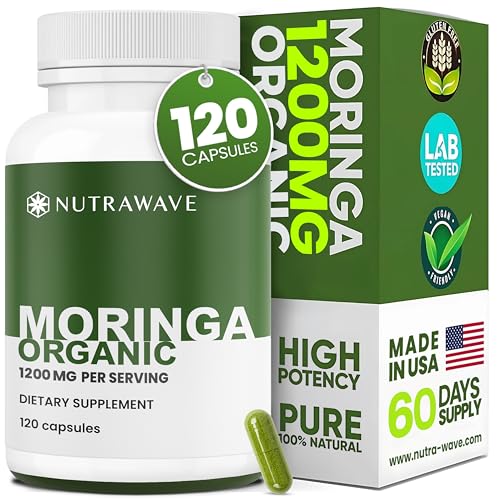
powder, 1 tsp (3g) — USDA organic, direct-sourced from smallholder farmers across Africa and India - Nature’s Way Moringa Leaf Capsules
capsules, 2 capsules (960mg) — Widely available mainstream supplement brand, whole-leaf capsules - Micro Ingredients Organic Moringa Leaf Powder
powder, 1 tsp (5g) — Budget-friendly bulk organic powder, third-party tested - Zint Moringa Leaf Powder
powder, 1 tbsp (7g) — Sourced from India, popular smoothie-add powder
As an Amazon Associate we earn from qualifying purchases. Quality varies widely — always choose a product with a published third-party test (COA) before buying.

A Note on the Evidence
This article summarizes laboratory and one animal-model study; none of it is human clinical trial evidence that moringa treats or prevents infection, so it should not be used to self-treat an infection or replace medical care. The FDA has not evaluated moringa leaf powder for safety or efficacy as a supplement, root and bark preparations carry a distinct, higher-risk profile and should be avoided by pregnant individuals, and anyone with an active infection or on medication should consult a doctor before using moringa products. This is informational, not medical advice.
Frequently Asked Questions
Does moringa kill bacteria in the body the way it does in a lab dish?
That hasn’t been tested. The antibacterial effects described in these studies come from applying extracts directly to bacterial cultures [3] [4], not from human trials measuring infection outcomes after eating or taking moringa.
Which part of the moringa plant has been studied for antimicrobial effects?
Both leaves and seeds have documented antimicrobial activity in lab testing [6] [7], and isolated leaf compounds have also been evaluated individually [12].
Has moringa been tested against a specific type of infection, like gum disease?
One study tested a moringa and red pomegranate combination against Porphyromonas gingivalis, a bacterium linked to gum disease, using patient-derived bacterial samples, and found antimicrobial activity in vitro [10]. This was a lab assay, not a clinical dental trial.
Is moringa's antifungal activity only relevant to agriculture?
Most of the antifungal data involves plant pathogenic fungi and nanoparticle-based extracts tested in lab conditions [8], plus antimicrobial compounds from fungal endophytes living in moringa tissue [9]. Neither line of research addresses human fungal infections directly.
Can moringa replace antibiotics or antifungal medication?
No. All the antimicrobial evidence here is lab-based (in vitro) or, in one case, an animal wound model [11]. There’s no human clinical evidence that moringa treats infections, so it shouldn’t replace medically prescribed antimicrobial treatment.
What is the proposed mechanism behind moringa's antimicrobial activity?
Researchers point to polyphenol and flavonoid compounds, such as quercetin and chlorogenic acid, that may disrupt microbial cells or act through antioxidant-related pathways, consistent with moringa’s broader proposed health mechanisms [1] [2].
References
- Abdull Razis AF et al. Health benefits of Moringa oleifera. Asian Pacific journal of cancer prevention : APJCP (2014). PMID 25374169
- Anwar F et al. Moringa oleifera: a food plant with multiple medicinal uses. Phytotherapy research : PTR (2007). PMID 17089328
- Jahan S et al. Antibacterial Effect of Moringa (Moringa oleifera) Leaf Ethanolic Extract Against Staphylococcus aureus and Escherichia coli. Mymensingh medical journal : MMJ (2022). PMID 36189541
- Boumaza-Hamladji S et al. Flavonoic content and antibacterial evaluation of Moringa oleifera Lam. leaves grow in Algeria. Journal of advanced pharmaceutical technology & research (2023). PMID 37692011
- El-Sherbiny GM et al. Antibacterial, antioxidant, cytotoxicity, and phytochemical screening of Moringa oleifera leaves. Scientific reports (2024). PMID 39681592
- Anzano A et al. Chemical Analysis and Antimicrobial Activity of Moringa oleifera Lam. Leaves and Seeds. Molecules (Basel, Switzerland) (2022). PMID 36558052
- El-Fakharany EM et al. Moringa oleifera seed methanol extract with consolidated antimicrobial, antioxidant, anti-inflammatory, and anticancer activities. Journal of food science (2024). PMID 38955793
- Jenish A et al. Moringa oleifera Nanoparticles Demonstrate Antifungal Activity Against Plant Pathogenic Fungi. Applied biochemistry and biotechnology (2022). PMID 35674924
- Arora DS et al. Antimicrobial Potential of Fungal Endophytes from Moringa oleifera. Applied biochemistry and biotechnology (2019). PMID 30039472
- Faisal Madhloom A et al. Antimicrobial Effect of Moringa Oleifera L. and Red Pomegranate against Clinically Isolated Porphyromonas gingivalis: in vitro Study. Archives of Razi Institute (2022). PMID 36883151
- Al-Ghanayem AA et al. Effect of Moringa oleifera Leaf Extract on Excision Wound Infections in Rats: Antioxidant, Antimicrobial, and Gene Expression Analysis. Molecules (Basel, Switzerland) (2022). PMID 35889362
- Segwatibe MK et al. Antioxidant and Antimicrobial Evaluations of Moringa oleifera Lam Leaves Extract and Isolated Compounds. Molecules (Basel, Switzerland) (2023). PMID 36677956
These statements have not been evaluated by the Food and Drug Administration. This information is not intended to diagnose, treat, cure, or prevent any disease. Content is for informational purposes only and is not medical advice; consult a qualified healthcare provider before starting any supplement. As an Amazon Associate we earn from qualifying purchases.
