Moringa oleifera leaves are dried and ground into a nutrient-dense powder that’s become a popular addition to smoothies and supplement stacks, largely on the strength of claims about its ‘antioxidant power.’ The leaves are genuinely rich in vitamins A and C, calcium, potassium, and plant compounds like quercetin and chlorogenic acid, and a growing body of lab and animal research does support antioxidant and mild anti-inflammatory activity tied to these polyphenols [1]. But antioxidant activity in a test tube or a rodent model is not the same thing as a proven clinical effect on oxidative stress markers in people.
This article looks specifically at what’s known about moringa’s effect on oxidative stress, where the evidence is strongest (plant chemistry and animal studies), where it’s thinner (human trials), and what a reasonable person should take away before treating moringa as a proven antioxidant intervention. This is informational content, not medical advice.
Key Takeaways
- Moringa leaves contain polyphenols (quercetin, chlorogenic acid) and vitamins A/C plausibly linked to antioxidant activity, not a single active drug-like compound [1]
- Antioxidant effects are well-documented in lab assays and animal injury models across liver, kidney, colon, and cerebellar tissue [2] [3] [4] [5]
- Direct human trials measuring oxidative stress biomarkers from moringa supplementation are limited; a key pregnancy-focused trial protocol exists but results are not yet available [6]
- Antioxidant potency likely varies by harvest and preparation conditions, leaf products are not standardized [7]
- Root and bark preparations carry a distinct, higher risk profile than leaf powder and should be avoided by pregnant individuals [8]
What 'Antioxidant Activity' Means for Moringa
Oxidative stress is an imbalance between reactive oxygen species (free radicals) and the body’s ability to neutralize them, and it’s implicated in aging and a wide range of chronic conditions. Antioxidants are compounds that can donate electrons to neutralize these reactive species or support the body’s own antioxidant enzyme systems.

Moringa’s proposed antioxidant mechanism isn’t a single active drug-like compound. Instead, it’s attributed to a mixture of polyphenols, including quercetin and chlorogenic acid, along with vitamins A and C and various flavonoids concentrated in the leaves [1]. Phytochemical analyses of moringa leaves confirm a dense profile of these bioactive compounds, and lab-based antioxidant assays consistently show measurable free-radical scavenging activity from leaf extracts [7] [9].
Preclinical Evidence: Animal and Cell Studies
Most of the direct evidence linking moringa to reduced oxidative stress markers comes from animal models, not humans. In one study, moringa fruit extract was tested against liver injury induced by 2-nitropropane in obese mice, and the extract showed measurable antioxidant protective effects on liver tissue [2].
In diabetic rodent models, moringa leaf preparations improved both blood glucose control and antioxidant status, suggesting the antioxidant effect may be linked to its broader metabolic activity rather than acting in isolation [10]. Other animal work has looked at moringa’s effect on oxidative stress biomarkers in the context of specific toxic exposures: cerebellar tissue in fluoride-exposed pregnant rats [5], kidney tissue in valproate-induced damage [3], colon tissue in chemically induced colitis [4], and detoxification biomarkers in fish exposed to a pesticide (cypermethrin) [11]. Across these varied injury models, moringa extracts were generally associated with improved oxidative stress markers and reduced tissue damage, though the models differ substantially in species, tissue, and type of insult, which limits how directly they translate to general human use.
A broader systematic review of plant-derived hypoglycemic medicines, including moringa, found consistent antioxidative and anti-inflammatory effects across in vivo and in vitro studies, reinforcing that this is a genuine and reproducible property of the plant’s compounds in lab and animal settings [12].

Human Evidence: Thinner and Still Emerging
This is the section where honesty matters most: rigorous human trials specifically measuring moringa’s effect on oxidative stress biomarkers are limited. A comprehensive pharmacological review of moringa covers its wide range of studied activities, including clinical research, but notes that much of the clinical evidence base remains preliminary relative to the volume of preclinical data [1]. An earlier systematic safety and efficacy review similarly found that human clinical data on moringa lag behind its traditional use and lab-based findings [8].
One notable human study in progress is a registered protocol for a nonrandomized trial examining whether moringa oleifera supplementation can reduce heavy metal toxicity and oxidative stress markers specifically in pregnant women [6]. The existence of this protocol signals that researchers consider the question worth testing in a real clinical population, but a protocol is not a result. As of the available evidence, this trial’s findings on efficacy are not yet established.
In short: the antioxidant story for moringa is well-supported at the level of plant chemistry and consistent across diverse animal and cell models, but the leap to ‘moringa reduces oxidative stress markers in healthy or at-risk humans’ rests on a much smaller and still-developing body of clinical work.

Does Preparation or Growth Stage Matter?
Not all moringa leaf material is chemically identical. Research on moringa germination conditions found that the plant’s phytochemical composition and antioxidant activity shift depending on how and when the leaves are harvested, with ideal germination conditions associated with higher measured antioxidant activity [7]. This matters for anyone comparing moringa products: leaf powder is not a single standardized substance, and potency can vary by growing conditions, harvest timing, and processing method, none of which are typically disclosed on a supplement label.
It’s also worth separating leaf preparations from root and bark preparations. The antioxidant research summarized here is centered on leaf and, in one case, fruit extracts. Root and bark preparations contain a different set of compounds, including vermifuge alkaloids, with a distinct and higher risk profile, and are not interchangeable with leaf powder for either antioxidant claims or safety [8].
Safety Context Relevant to Antioxidant Use
The FDA has not evaluated moringa leaf powder for safety or efficacy as a dietary supplement. Food-grade leaf preparations are generally considered well-tolerated based on the available safety review literature [8], but ‘generally well-tolerated’ is not the same as ‘risk-free for everyone.’
Root and bark extracts carry a materially different risk profile and have documented traditional use as uterine stimulants, which is why pregnant individuals should avoid concentrated root or bark preparations specifically [8]. Interestingly, this is also where some of the more targeted human research is heading, the pregnant-women oxidative stress trial protocol referenced above is specifically studying supplementation in this population, but that trial is examining a controlled protocol, not a green light for self-directed use of concentrated extracts during pregnancy [6].

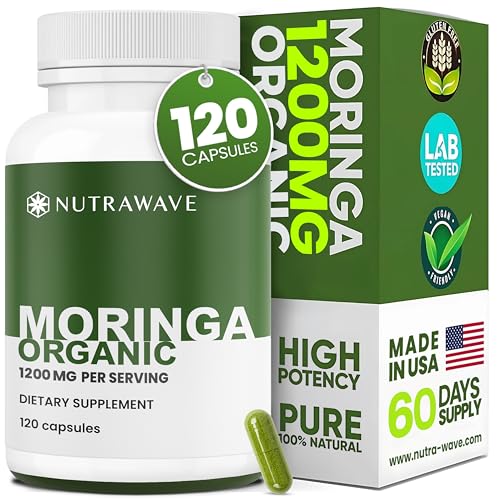
🛒 Where to Buy Moringa (Moringa oleifera)
- CleanseParasites Intra-Cellular Superfood Editor’s Pick
Contains moringa leaf alongside sea moss, bladderwrack, black cumin seed, and other superfood ingredients. - Kuli Kuli Organic Moringa Powder
powder, 1 tsp (3g) — USDA organic, direct-sourced from smallholder farmers across Africa and India - Nature’s Way Moringa Leaf Capsules
capsules, 2 capsules (960mg) — Widely available mainstream supplement brand, whole-leaf capsules - Micro Ingredients Organic Moringa Leaf Powder
powder, 1 tsp (5g) — Budget-friendly bulk organic powder, third-party tested - Zint Moringa Leaf Powder
powder, 1 tbsp (7g) — Sourced from India, popular smoothie-add powder
As an Amazon Associate we earn from qualifying purchases. Quality varies widely — always choose a product with a published third-party test (COA) before buying.
A Note on the Evidence
Most of the antioxidant evidence for moringa comes from lab and animal studies rather than large controlled human trials, so effects on oxidative stress markers in people remain preliminary. This is informational content, not medical advice; talk to a doctor before starting any supplement, especially during pregnancy or alongside medications.
Frequently Asked Questions
Is moringa a proven antioxidant supplement in humans?
Lab and animal studies consistently show antioxidant activity from moringa leaf compounds [1] [9], but large, controlled human trials measuring oxidative stress biomarkers are still limited. The evidence base is stronger for preclinical models than for confirmed human outcomes.
What compounds in moringa are responsible for its antioxidant effects?
Researchers point to polyphenols like quercetin and chlorogenic acid along with vitamins A and C as the main contributors, rather than one single active ingredient [1].
Does moringa help with oxidative stress from specific health conditions?
Animal studies have tested moringa against oxidative stress in diabetes models [10], drug-induced kidney damage [3], chemically induced colitis [4], and toxin exposure [11], generally finding improved markers. These findings come from animal models and haven’t all been confirmed in comparable human studies.
Is moringa safe during pregnancy?
Leaf-based food preparations are generally considered well-tolerated, but pregnant individuals should avoid concentrated root and bark extracts, which have documented uterine-stimulant use in traditional medicine [8]. A trial protocol is currently examining moringa supplementation for oxidative stress in pregnant women, but results are not yet published [6].

Does the growing or preparation method affect moringa's antioxidant strength?
Yes. Research on germination conditions found that phytochemical composition and measured antioxidant activity shift depending on plant growth stage and conditions, meaning products aren’t uniformly potent [7].
Has the FDA approved moringa for any antioxidant health claim?
No. The FDA has not evaluated moringa leaf powder for safety or efficacy as a supplement, and no antioxidant health claim has regulatory approval [8].
References
- Pareek A et al. Moringa oleifera: An Updated Comprehensive Review of Its Pharmacological Activities, Ethnomedicinal, Phytopharmaceutical Formulation, Clinical, Phytochemical, and Toxicological Aspects. International journal of molecular sciences (2023). PMID 36768420
- Thadeus MS et al. Moringa oleifera fruit extract as a potential antioxidant against liver injury by 2-Nitropropane induction in obese male mice model: pre-clinical study. F1000Research (2023). PMID 39282511
- Magaji UF et al. Biochemical and Histological Effects of Moringa oleifera Extract against Valproate-Induced Kidney Damage. Journal of medicinal food (2024). PMID 38836511
- Hassan HM et al. Modulatory effects of Moringa oleifera leaf extract on sodium nitrate-induced experimental colitis via regulation of P53, Ki-67 and PCNA biomarkers. Tissue & cell (2024). PMID 38493756
- El-Helaly A et al. Miracle Tree (Moringa oleifera) Attuned GFAP and Synaptophysin Levels, Oxidative Stress and Biomarkers in Cerebellar Fluorosis of Pregnant Rats. Pakistan journal of biological sciences : PJBS (2023). PMID 38334155
- Amqam H et al. Moringa oleifera Supplementation for Reducing Heavy Metal Toxicity and Oxidative Stress in Pregnant Women: Protocol for a Nonrandomized Trial Study. JMIR research protocols (2025). PMID 41172352
- Bhuker A et al. Probing the Phytochemical Composition and Antioxidant Activity of Moringa oleifera under Ideal Germination Conditions. Plants (Basel, Switzerland) (2023). PMID 37631221
- Stohs SJ et al. Review of the Safety and Efficacy of Moringa oleifera. Phytotherapy research : PTR (2015). PMID 25808883
- El-Sherbiny GM et al. Antibacterial, antioxidant, cytotoxicity, and phytochemical screening of Moringa oleifera leaves. Scientific reports (2024). PMID 39681592
- Gupta R et al. Evaluation of antidiabetic and antioxidant activity of Moringa oleifera in experimental diabetes. Journal of diabetes (2012). PMID 22103446
- Tahir R et al. Chronic cypermethrin induced toxicity and molecular fate assessment within common carp (Cyprinus carpio) using multiple biomarkers approach and its novel therapeutic detoxification. Chemosphere (2024). PMID 38663676
- Adel-Mehraban MS et al. Antioxidative and Anti-inflammatory Effects of Plant-derived Hypoglycemic Medicines: An In vivo/In vitro Systematic Review. Current topics in medicinal chemistry (2024). PMID 38644706
These statements have not been evaluated by the Food and Drug Administration. This information is not intended to diagnose, treat, cure, or prevent any disease. Content is for informational purposes only and is not medical advice; consult a qualified healthcare provider before starting any supplement. As an Amazon Associate we earn from qualifying purchases.
