Moringa oleifera leaves are unusually dense in iron, vitamin C, and other micronutrients compared to many staple foods, which has made moringa powder a subject of interest for anemia prevention in food-insecure settings. Several small trials have tested moringa-fortified foods or leaf powder supplements in groups at high risk of anemia, including pregnant women, breastfeeding mothers, and young children.
The findings are worth taking seriously, but they come with real limits: the studies are mostly small, often unblinded or only partially blinded, and conducted in specific populations (rural Tanzania, Zambia, Indonesia, Kenya) that may not generalize to well-nourished adults elsewhere. This article summarizes what the human research actually shows, and where the evidence stops.
Key Takeaways
- Multiple small human trials link moringa leaf supplementation to improved anemia-related outcomes in pregnant women, breastfeeding mothers, and young children in food-insecure settings [1][2].
- The proposed mechanism is nutritional: iron plus vitamin C and other micronutrients supporting hemoglobin synthesis, not a single active drug-like compound [3].
- Evidence quality is limited: mostly small, pilot, or protocol-stage studies in specific low-resource populations, not large general-population trials [4][5].
- Leaf powder and root/bark preparations are not the same, root and bark carry a distinct, higher risk, including uterine-stimulant use historically; pregnant individuals should avoid concentrated extracts and root/bark forms.
- Moringa is not a substitute for diagnosing the cause of anemia; a clinician should evaluate before treatment, especially outside the food-insecure contexts these studies were conducted in.
Why Moringa Is Studied for Anemia
Moringa leaf powder is nutrient-dense, providing iron alongside vitamin C, vitamin A, calcium, and potassium in a low-cost, shelf-stable food form. A systematic review of moringa supplementation across human and animal nutrition research notes its consistent nutrient profile as the basis for interest in deficiency-related conditions, anemia among them [6].
The proposed mechanism isn’t a single active anemia-fighting compound. Rather, moringa’s iron content combined with vitamin C (which improves non-heme iron absorption) and its broader micronutrient package are thought to support hemoglobin synthesis and iron status when added to otherwise iron-poor diets [3]. This is a nutritional-adequacy mechanism, not a pharmacological one.

Moringa During Pregnancy: Effects on Anemia
Anemia in pregnancy is common and consequential, which is why several trials have focused specifically on pregnant women. A study testing biscuits fortified with Moringa oleifera leaf flour found improvements in anemia status among pregnant women who consumed them regularly, compared to those who didn’t [1].
A separate pilot trial protocol examined Moringa oleifera supplementation in Kenyan breastfeeding mothers, looking at maternal and infant health outcomes in a cluster-randomized, single-blinded design [4]. A related pilot trial reported on maternal moringa leaf supplementation and its effects on maternal and infant nutritional status, plus human milk output, using a single-blinded cluster-randomized approach [5]. These maternal studies point toward moringa as a food-based supplement that may support nutritional status during pregnancy and lactation, though pilot and protocol-stage trials are, by design, preliminary and meant to inform larger studies rather than serve as definitive proof.
Moringa and Anemia in Young Children
Anemia in children under two is a major public health concern in many low-resource settings, since it coincides with rapid brain development. A study in Kisarawe District, Tanzania, tested Moringa oleifera leaf powder supplementation specifically for reducing anemia in children below two years old, reporting a benefit associated with supplementation [2].
In Zambia, researchers evaluated the nutritional characteristics of local Moringa oleifera and tested short-term daily supplementation for acceptability and safety in a group of malnourished girls, an important step given that any intervention aimed at children needs to first establish that it’s tolerated before efficacy claims are meaningful [7].

Separately, a study in Madura Island, Indonesia, looked at underutilized food crops, including moringa, as a way to improve diet quality in young children living in food-insecure areas, situating moringa within a broader strategy of nutrient-dense local foods rather than as a standalone anemia treatment [8].
How Strong Is This Evidence, Really?
Taken together, these studies form a consistent but modest pattern: moringa leaf powder, delivered as a fortified food or standalone supplement, is associated with improved anemia-related outcomes in specific vulnerable populations, pregnant women, breastfeeding mothers, and young children, in low-resource, food-insecure settings [1][2][4][5].
What this evidence does not establish is that moringa works the same way, or at all, for someone who is not iron- or micronutrient-deficient to begin with. None of the cited studies are large, multi-site, placebo-controlled trials in general populations. Several are pilot studies or protocols explicitly designed to test feasibility before a bigger trial is run [4][5]. A systematic review of moringa’s broader nutritional and therapeutic literature also frames the plant’s benefits as most relevant in the context of correcting existing nutritional gaps, not as a universal anemia remedy [3][6].
Who Should Be Cautious
The studies discussed here used moringa leaf preparations, powders, flour, or fortified foods, which have a different risk profile than root or bark extracts. Moringa root and bark contain vermifuge alkaloids and other compounds with documented uterine-stimulant use in traditional medicine; pregnant individuals should avoid concentrated extracts and root/bark preparations specifically, even though leaf-based supplementation was studied in pregnant populations in the trials above [1][4][5].

Food-grade leaf powder is generally well-tolerated, and the Zambian study specifically assessed short-term safety of daily supplementation, finding it acceptable in the population tested [7]. Still, the FDA has not evaluated moringa leaf powder for safety or efficacy as a dietary supplement, so quality and dosing consistency between products can vary.
Practical Takeaway on Using Moringa for Iron and Hemoglobin
If you’re considering moringa leaf powder for anemia, the strongest evidence applies to people with an existing dietary gap, iron-poor diets in pregnancy, lactation, or early childhood in food-insecure settings [2][1][8]. For someone with anemia from a different cause (heavy menstrual bleeding, GI blood loss, a genetic condition, chronic disease), moringa is not a substitute for diagnosis and medical iron therapy.
Anemia has many causes, and self-treating with a supplement before knowing the underlying cause can delay appropriate care. A blood test and a conversation with a clinician are the appropriate first steps before adding any supplement, moringa included.
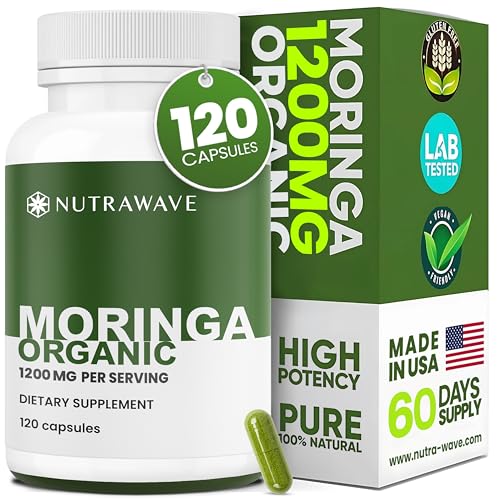
🛒 Where to Buy Moringa (Moringa oleifera)
- CleanseParasites Intra-Cellular Superfood Editor’s Pick
Contains moringa leaf alongside sea moss, bladderwrack, black cumin seed, and other superfood ingredients. - Kuli Kuli Organic Moringa Powder
powder, 1 tsp (3g) — USDA organic, direct-sourced from smallholder farmers across Africa and India - Nature’s Way Moringa Leaf Capsules
capsules, 2 capsules (960mg) — Widely available mainstream supplement brand, whole-leaf capsules - Micro Ingredients Organic Moringa Leaf Powder
powder, 1 tsp (5g) — Budget-friendly bulk organic powder, third-party tested - Zint Moringa Leaf Powder
powder, 1 tbsp (7g) — Sourced from India, popular smoothie-add powder
As an Amazon Associate we earn from qualifying purchases. Quality varies widely — always choose a product with a published third-party test (COA) before buying.

A Note on the Evidence
Most of this evidence comes from small or pilot-stage trials in specific food-insecure populations, so it may not generalize to other groups or causes of anemia. Anemia has many possible causes; get a proper diagnosis from a doctor before using moringa or any supplement as treatment, and pregnant individuals should avoid concentrated root or bark extracts specifically.
Frequently Asked Questions
Does moringa actually raise hemoglobin levels?
In several small trials in pregnant women and young children in food-insecure settings, moringa supplementation was associated with improved anemia status [1][2]. Whether it meaningfully raises hemoglobin in a well-nourished adult without an existing deficiency hasn’t been established.
Is moringa safe during pregnancy?
Leaf-based moringa preparations were used in pregnancy and lactation studies without reported major safety issues [1][4][5], but root and bark extracts are a different matter, they contain compounds with documented uterine-stimulant use traditionally, and pregnant individuals should avoid those concentrated forms.
How does moringa compare to a standard iron supplement?
None of the cited studies directly compared moringa against standard iron supplementation (like ferrous sulfate) in a head-to-head trial, so a direct comparison of effectiveness can’t be made from this evidence.
Can moringa help anemia in children?
A Tanzanian study found moringa leaf powder supplementation associated with reduced anemia in children under two [2], and a Zambian study confirmed short-term safety of leaf supplementation in malnourished girls [7]. These are specific, food-insecure populations, not a general recommendation for all children.
What's the mechanism, is it just the iron content?
It’s iron plus supporting nutrients, moringa leaves provide iron alongside vitamin C and other micronutrients thought to aid absorption and overall nutritional status, rather than acting as a single targeted anemia drug [3][6].
Should I stop taking prescribed iron and switch to moringa?
No. This evidence doesn’t support replacing medically prescribed iron therapy with moringa. If you have diagnosed anemia, talk to your doctor before changing your treatment; this article is informational, not medical advice.
References
- Manggul MS et al. Biscuits containing Moringa oleifera leaves flour improve conditions of anemia in pregnant women. Gaceta sanitaria (2021). PMID 34929809
- Shija AE et al. Effect of Moringa Oleifera leaf powder supplementation on reducing anemia in children below two years in Kisarawe District, Tanzania. Food science & nutrition (2019). PMID 31428346
- Arora S et al. Nutritional significance and therapeutic potential of Moringa oleifera: The wonder plant. Journal of food biochemistry (2021). PMID 34533234
- Mogaka JN et al. Investigating the Impact of Moringa oleifera Supplemented to Kenyan Breastfeeding Mothers on Maternal and Infant Health: A Cluster Randomized Single-Blinded Controlled Pilot Trial Protocol. JPGN reports (2022). PMID 37168619
- Attia SL et al. Effect of Maternal Moringa oleifera Leaf Supplementation on Maternal and Infant Nutritional Status and Human Milk Output: A Pilot Single-Blinded Cluster-Randomized Trial. Current developments in nutrition (2025). PMID 41282517
- Brar S et al. The impact of Moringa oleifera leaf supplementation on human and animal nutrition, growth, and milk production: A systematic review. Phytotherapy research : PTR (2022). PMID 35302264
- Barichella M et al. Nutritional characterisation of Zambian Moringa oleifera: acceptability and safety of short-term daily supplementation in a group of malnourished girls. International journal of food sciences and nutrition (2019). PMID 29792366
- Andrias DR et al. Nutritional potential of underutilized food crops to improve diet quality of young children in food insecure prone areas of Madura Island, Indonesia. Asia Pacific journal of clinical nutrition (2019). PMID 31826381
These statements have not been evaluated by the Food and Drug Administration. This information is not intended to diagnose, treat, cure, or prevent any disease. Content is for informational purposes only and is not medical advice; consult a qualified healthcare provider before starting any supplement. As an Amazon Associate we earn from qualifying purchases.
