Moringa oleifera, a fast-growing tropical tree, has drawn scientific interest for its nutrient-dense leaves containing vitamins, minerals, and polyphenols such as quercetin and chlorogenic acid. Preclinical studies suggest these constituents may exert antioxidant and anti-inflammatory effects that intersect with cancer-related pathways.
This article summarizes peer-reviewed laboratory research on moringa leaf, seed, and isolated compounds in cancer models. All findings discussed are from cell or animal studies; no clinical trials in humans are cited. The FDA has not evaluated moringa leaf powder for safety or efficacy as a supplement.
Key Takeaways
- Preclinical studies show moringa leaf and seed extracts can induce apoptosis and cell cycle arrest in various cancer cell lines.
- Key mechanisms include modulation of NF-κB, Hedgehog, and Jab1 pathways, and upregulation of pro-apoptotic proteins (Bax, p53, caspase 8).
- Isothiocyanate compounds (e.g., benzyl isothiocyanate, quinazolinone derivatives) are leading candidate actives.
- Most evidence is in vitro; only a few studies include animal models, and no human clinical trials are cited here.
- Food-grade leaf powder differs from concentrated extracts; root/bark preparations carry distinct risks and should be avoided in pregnancy.
Overview of the Preclinical Evidence Base
Research on Moringa oleifera’s anticancer potential spans more than a decade and includes in vitro work on multiple cancer cell lines and a limited number of in vivo studies. A 2016 review framed moringa as a candidate for chemoprevention, highlighting its multi-targeted nature rather than a single drug-like mechanism [1]. A more recent 2025 review characterized the plant’s anticancer profile as a safer, multi-targeted adjunct approach, emphasizing the collective action of its phytochemicals [2].
Studies have examined aqueous and organic extracts from leaves and seeds, as well as isolated fractions and pure compounds. For example, a 2024 study reported that a methanol extract of moringa seeds demonstrated consolidated antimicrobial, antioxidant, anti-inflammatory, and anticancer activities in vitro [3]. The breadth of preparations tested makes direct comparisons difficult, but recurring themes include induction of apoptosis, cell cycle arrest, and modulation of signaling pathways.

Key Bioactive Compounds Under Investigation
Moringa leaves contain a variety of polyphenols, flavonoids, and glucosinolate-derived isothiocyanates. Among the latter, benzyl isothiocyanate and related quinazolinone derivatives have been isolated and tested directly. A 2019 study purified bis(isothiocyanatomethyl)benzene from a moringa leaf extract and identified it as a plant-derived anti-neoplastic compound [4].
In 2023, researchers synthesized and tested moringa-derived isothiocyanate quinazolinone derivatives, finding they inhibited U251 glioma cell proliferation through cell cycle regulation and apoptosis induction [5]. These compounds, along with more general polyphenol fractions, are thought to underlie much of the observed bioactivity, though the relative contribution of each in whole-leaf preparations remains under study.
Mechanisms: Cell Cycle Arrest and Apoptosis Induction
A consistent finding across multiple cancer models is moringa extract-induced cell cycle arrest, frequently at the G0/G1 phase, followed by apoptosis. In human prostate PC-3 cells, a methanolic leaf extract triggered apoptosis and G0/G1 arrest, an effect linked to downregulation of the Hedgehog signaling pathway [6].
Similar outcomes were reported in Dalton’s lymphoma cells, where a leaf extract induced cell cycle arrest and mitochondrial apoptosis both in vitro and in a mouse model [7]. In breast cancer MCF-7 cells, a dichloromethane fraction of a methanolic leaf extract selectively inhibited proliferation by upregulating pro-apoptotic markers Bax, p53, and caspase 8 [8]. These convergent mechanisms suggest a common upstream influence on cell survival checkpoints.

Modulation of Key Signaling Pathways
Beyond cell cycle machinery, moringa extracts have been shown to interfere with oncogenic signaling cascades. An aqueous leaf extract downregulated nuclear factor-kappaB (NF-κB) in pancreatic cancer cells and enhanced the cytotoxic effect of chemotherapy, indicating a potential sensitizing role [9].
In cervical cancer cells, a methanolic leaf extract inhibited Jab1 (also known as CSN5), a protein involved in cell cycle control and DNA repair, proposing a targeted therapeutic mechanism [10]. The Hedgehog pathway inhibition noted in prostate cells [6] adds a developmental signaling dimension to the anti-proliferative effects. Together, these data point to multi-pathway modulation rather than a single molecular target.
Cancer-Type Specific Findings in Preclinical Models
Studies have explored moringa preparations across a range of cancer types. In addition to the prostate, lymphoma, breast, pancreatic, cervical, and glioma models already noted, the 2025 review cataloged activity in liver, lung, colorectal, and other cancers in preclinical settings [2].
Selectivity for cancer cells over normal cells has been reported in some studies, such as the dichloromethane fraction’s selective inhibition of MCF-7 breast cancer cells [8], but this is not universal. The 2023 Dalton’s lymphoma study included an in vivo component, providing a step beyond cell culture, yet most evidence remains at the in vitro level [7]. Reproducibility across laboratories and standardization of extracts are ongoing challenges.

Chemoprevention Potential and Adjunct Considerations
The concept of chemoprevention — using natural compounds to delay or prevent carcinogenesis — has been applied to moringa since at least 2016, when its phytochemical profile was argued to target multiple stages of cancer development [1]. The 2025 review expanded this framing, positioning moringa as a multi-targeted adjunct that may complement conventional therapies [2].
The pancreatic cancer study demonstrating NF-κB downregulation and chemotherapy sensitization [9] provides a mechanistic basis for adjunct use. However, no human data exist to define dosing, timing, or safety in combination with standard treatments. The distinction between food-grade leaf powder and concentrated extracts is critical, as root and bark preparations contain alkaloids with a higher risk profile and documented uterine-stimulant effects in traditional use.
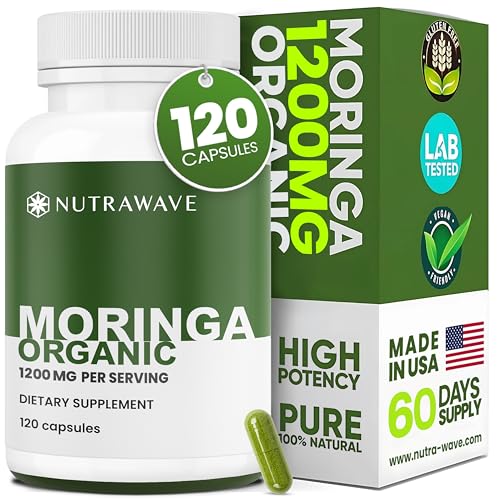
🛒 Where to Buy Moringa (Moringa oleifera)
- CleanseParasites Intra-Cellular Superfood Editor’s Pick
Contains moringa leaf alongside sea moss, bladderwrack, black cumin seed, and other superfood ingredients. - Kuli Kuli Organic Moringa Powder
powder, 1 tsp (3g) — USDA organic, direct-sourced from smallholder farmers across Africa and India - Nature’s Way Moringa Leaf Capsules
capsules, 2 capsules (960mg) — Widely available mainstream supplement brand, whole-leaf capsules - Micro Ingredients Organic Moringa Leaf Powder
powder, 1 tsp (5g) — Budget-friendly bulk organic powder, third-party tested - Zint Moringa Leaf Powder
powder, 1 tbsp (7g) — Sourced from India, popular smoothie-add powder
As an Amazon Associate we earn from qualifying purchases. Quality varies widely — always choose a product with a published third-party test (COA) before buying.

A Note on the Evidence
All cited findings are from preclinical models; no human efficacy or safety data for cancer are included. Moringa root and bark extracts contain alkaloids with uterine-stimulant effects and should be avoided, especially in pregnancy. Consult a healthcare professional before using moringa supplements during cancer treatment or if you have a medical condition.
Frequently Asked Questions
Does moringa cure cancer?
No. Current evidence is limited to laboratory (cell and animal) studies. No clinical trials in humans have established moringa as a cancer treatment or cure.
Which parts of the moringa plant have been studied for anticancer effects?
Most research uses leaf extracts (aqueous, methanolic, or fractionated) and seed extracts. Isolated compounds like isothiocyanates have also been tested. Root and bark extracts are not recommended due to toxic alkaloids.
How might moringa compounds work against cancer cells?
Studies report induction of apoptosis, G0/G1 cell cycle arrest, downregulation of NF-κB and Hedgehog signaling, inhibition of Jab1, and upregulation of Bax, p53, and caspase 8 [9][6][10][8][7].
Is moringa safe to take during cancer treatment?
Safety of concentrated extracts alongside chemotherapy or radiation has not been established in humans. Food-grade leaf powder is generally well-tolerated as food, but patients should consult their oncology team before using any supplement.
Are there human studies on moringa and cancer?
The provided evidence base contains only preclinical (in vitro and animal) studies. No human clinical trial data are cited here.
What is the difference between moringa leaf powder and concentrated extracts?
Leaf powder is a dried food product with a broad nutrient and phytochemical profile. Concentrated extracts (e.g., methanolic, dichloromethane fractions) isolate specific compounds at higher doses and may carry different safety profiles. Root and bark extracts contain vermifuge alkaloids and uterine stimulants.
References
- Karim NA et al. Moringa oleifera Lam: Targeting Chemoprevention. Asian Pacific journal of cancer prevention : APJCP (2016). PMID 27644601
- Abro F et al. Harnessing the anticancer potential of Moringa oleifera: a safer, multi-targeted adjunct. Annals of medicine and surgery (2012) (2025). PMID 41377277
- El-Fakharany EM et al. Moringa oleifera seed methanol extract with consolidated antimicrobial, antioxidant, anti-inflammatory, and anticancer activities. Journal of food science (2024). PMID 38955793
- Paul S et al. Bis (Isothiocyanatomethyl) Benzene, A Plant Derived Anti-Neoplastic Compound: Purified from Moringa Oleifera Leaf Extract. Anti-cancer agents in medicinal chemistry (2019). PMID 30727916
- Xie J et al. Moringa oleifera Lam. Isothiocyanate Quinazolinone Derivatives Inhibit U251 Glioma Cell Proliferation through Cell Cycle Regulation and Apoptosis Induction. International journal of molecular sciences (2023). PMID 37511135
- Khan F et al. Moringa oleifera methanolic leaves extract induces apoptosis and G0/G1 cell cycle arrest via downregulation of Hedgehog Signaling Pathway in human prostate PC-3 cancer cells. Journal of food biochemistry (2020). PMID 32588472
- Kumar S et al. Moringa oleifera L. leaf extract induces cell cycle arrest and mitochondrial apoptosis in Dalton's Lymphoma: An in vitro and in vivo study. Journal of ethnopharmacology (2023). PMID 36306933
- Mohd Fisall UF et al. Dichloromethane fraction of Moringa oleifera leaf methanolic extract selectively inhibits breast cancer cells (MCF7) by induction of apoptosis via upregulation of Bax, p53 and caspase 8 expressions. Molecular biology reports (2021). PMID 34086162
- Berkovich L et al. Moringa Oleifera aqueous leaf extract down-regulates nuclear factor-kappaB and increases cytotoxic effect of chemotherapy in pancreatic cancer cells. BMC complementary and alternative medicine (2013). PMID 23957955
- Pandey P et al. Jab1 Inhibition by Methanolic Extract of Moringa Oleifera Leaves in Cervical Cancer Cells: A Potent Targeted Therapeutic Approach. Nutrition and cancer (2021). PMID 32996344
These statements have not been evaluated by the Food and Drug Administration. This information is not intended to diagnose, treat, cure, or prevent any disease. Content is for informational purposes only and is not medical advice; consult a qualified healthcare provider before starting any supplement. As an Amazon Associate we earn from qualifying purchases.
