Moringa oleifera has picked up a reputation online as a “cancer-fighting” superfood, largely on the strength of laboratory studies showing that extracts from its leaves can slow or kill cancer cells in a dish. That research is real, but it is also early-stage, mostly limited to cell cultures and a small number of animal models, and it does not amount to evidence that moringa treats, cures, or prevents cancer in people.
This article walks through what the in vitro and preclinical research actually found, the proposed mechanisms researchers are investigating, and why none of it should be read as a substitute for oncology care. Understanding the difference between “showed activity against cancer cells in a lab” and “treats cancer” is the whole point of reading past the headline.
Key Takeaways
- Moringa leaf extracts have shown anticancer activity against specific cancer cell lines in laboratory (in vitro) studies, plus limited animal research.
- A 2024 systematic review of moringa and oral squamous cell carcinoma found the evidence is still preclinical, with no human clinical trials establishing a treatment effect.
- Proposed mechanisms center on antioxidant and anti-inflammatory activity from polyphenols like quercetin and chlorogenic acid, not a single anticancer drug compound.
- Cell-line and animal findings do not reliably predict effects in humans; absorption, metabolism, and dosing in the body are entirely different from a lab dish.
- Moringa leaf powder is not FDA-evaluated as a cancer treatment and should never replace or delay oncology care; talk to your oncologist before adding any supplement during cancer treatment.
What the Laboratory Research Has Actually Tested
Most of the anticancer research on moringa comes from in vitro work: taking extracts of the leaf (and in some studies, other plant parts) and applying them directly to cancer cell lines grown in a dish, then measuring whether cell growth slows, cells stop dividing, or cells die off. A broad review found that moringa oleifera extracts showed anticancer properties across a range of these in vitro models, alongside a smaller number of in vivo (animal) studies [1].
One frequently cited study isolated specific bioactive compounds from moringa leaf and tested them directly against MDA-MB-231 cells, a commonly used triple-negative breast cancer cell line, identifying compounds with measurable anticancer activity in that bioassay-guided screen [2]. Similarly, laboratory work on HepG2 liver cancer cells found that moringa oleifera components affected a specific cellular quality-control process called chaperone-mediated autophagy, a mechanism cancer cells can exploit to survive stress [3].

It’s worth being precise about what these study designs can and cannot tell us. A cell line in a dish, or even a tumor in a mouse, does not behave identically to a tumor in a human body with an intact immune system, blood supply, and drug metabolism. These are hypothesis-generating studies, not proof of clinical benefit.
Oral Cancer: A More Direct Look at the Clinical Evidence Gap
Oral squamous cell carcinoma is one of the few cancer types where researchers have specifically tried to pull together what’s known about moringa’s effects. A 2024 systematic review examined the anticancer effect of moringa oleifera in oral squamous cell carcinoma and found that the existing evidence is still concentrated in laboratory and preclinical studies, rather than controlled human trials [4].
That distinction matters. A systematic review exists specifically because researchers want to know whether a body of evidence is strong enough to guide clinical recommendations. When the review itself points to a preclinical-only evidence base, that is the review’s authors telling us the research hasn’t yet reached the stage where it can inform treatment decisions.
The Proposed Mechanisms: Why Might Moringa Show Any Anticancer Activity?
Moringa leaves are dense in plant compounds, quercetin and chlorogenic acid among them, that have antioxidant and mild anti-inflammatory activity. Researchers investigating moringa’s anticancer potential have looked at chemoprevention, the idea that certain dietary compounds might interfere with the early biological steps that allow normal cells to become cancerous, rather than treating existing tumors [5].

A broader review of moringa’s phytochemistry describes overlapping antioxidant, anticancer, and anti-inflammatory effects observed across various cell-line studies, again tied to the plant’s polyphenol and flavonoid content rather than a single isolated drug-like molecule [6]. This is consistent with how most food-derived plant compounds are studied: not as a single active ingredient with one mechanism, but as a mixture of compounds that may nudge multiple cellular pathways at once, typically toward reducing oxidative stress and dampening inflammatory signaling that can contribute to cancer development over time.
A comprehensive overview of moringa’s cultivation, phytochemistry, and pharmacology similarly catalogs the range of bioactive compounds identified in the leaves and the various pharmacological effects, including anticancer activity, that have been studied in laboratory settings [7].
What a Systematic Look at Recent Research Says
A 2024 systematic review of moringa’s biological properties over the last decade synthesized findings across multiple areas of research, anticancer activity among them, and reinforced that the field remains dominated by laboratory and preclinical work rather than randomized controlled trials in cancer patients [8].
Separately, a review focused on moringa leaf’s bioactive compounds, covering composition, potential health benefits, and how well those compounds are absorbed by the body (bioaccessibility), is a useful reminder that a compound showing activity in a test tube still has to survive digestion, absorption, and metabolism to have any effect in a living person, a step most in vitro cancer studies do not test [9].

What This Research Does Not Show
None of the cited research constitutes evidence that moringa treats cancer, shrinks tumors in humans, replaces chemotherapy or radiation, or prevents cancer from developing. The studies referenced here are laboratory (in vitro) and, in some cases, animal (in vivo) research; none are human clinical trials measuring cancer outcomes.
It’s also worth separating moringa’s anticancer research from its other studied properties, such as anti-allergic activity observed in extracts and isolated compounds in laboratory assays [10]. That moringa has been studied across several biological activities does not mean any one of them is established or interchangeable with medical treatment.
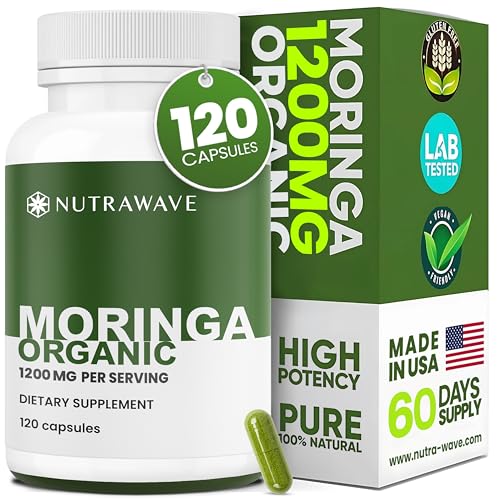
🛒 Where to Buy Moringa (Moringa oleifera)
- CleanseParasites Intra-Cellular Superfood Editor’s Pick
Contains moringa leaf alongside sea moss, bladderwrack, black cumin seed, and other superfood ingredients. - Kuli Kuli Organic Moringa Powder
powder, 1 tsp (3g) — USDA organic, direct-sourced from smallholder farmers across Africa and India - Nature’s Way Moringa Leaf Capsules
capsules, 2 capsules (960mg) — Widely available mainstream supplement brand, whole-leaf capsules - Micro Ingredients Organic Moringa Leaf Powder
powder, 1 tsp (5g) — Budget-friendly bulk organic powder, third-party tested - Zint Moringa Leaf Powder
powder, 1 tbsp (7g) — Sourced from India, popular smoothie-add powder
As an Amazon Associate we earn from qualifying purchases. Quality varies widely — always choose a product with a published third-party test (COA) before buying.

A Note on the Evidence
This article summarizes early-stage laboratory and preclinical research, not clinical evidence of a cancer treatment or cure; the FDA has not evaluated moringa leaf powder for safety or efficacy as a supplement, and anyone with cancer, who is pregnant, or considering concentrated extracts should talk to a physician before use. This is informational content, not medical advice.
Frequently Asked Questions
Has moringa been proven to cure or treat cancer in humans?
No. The research cited here is laboratory (in vitro) and some animal studies showing that moringa extracts can affect cancer cells under controlled conditions [1]. There are no human clinical trials establishing that moringa treats or cures cancer, and a 2024 systematic review on oral cancer specifically noted the evidence remains preclinical [4].
What cancer cell types has moringa been tested against?
Studies have looked at cell lines including MDA-MB-231 breast cancer cells [2] and HepG2 liver cancer cells [3], along with broader reviews covering multiple cancer cell types tested in vitro [1].
What's the proposed mechanism behind moringa's anticancer research?
Researchers point to moringa’s antioxidant and anti-inflammatory polyphenols, such as quercetin and chlorogenic acid, and their potential role in chemoprevention, interfering with early steps of cancerous cell transformation, rather than a single targeted anticancer drug mechanism [5] [6].
Is it safe to take moringa supplements alongside cancer treatment?
This is a question for an oncologist, not something the current research answers. Food-grade leaf preparations are generally considered well-tolerated, but supplements can interact with medications and there is no clinical evidence establishing safety or benefit specifically during active cancer treatment. Always disclose any supplement use to your treatment team.
Does moringa root or bark have the same research behind it as the leaf?
No, and this distinction matters for safety, not just evidence strength. Most of the anticancer research discussed here focuses on leaf extracts. Root and bark preparations contain a different set of compounds, including vermifuge alkaloids, with a distinct and higher risk profile, and traditional use of concentrated root/bark preparations includes uterine-stimulant effects; pregnant individuals should avoid these entirely.
Should someone with cancer take moringa instead of standard treatment?
No. Nothing in the current evidence supports replacing, delaying, or supplementing prescribed cancer treatment with moringa. The available research is early-stage laboratory work, not a validated therapy, and decisions about cancer treatment should be made with an oncologist.
References
- Khor KZ et al. The In Vitro and In Vivo Anticancer Properties of Moringa oleifera. Evidence-based complementary and alternative medicine : eCAM (2018). PMID 30538753
- Wisitpongpun P et al. In Vitro Bioassay-Guided Identification of Anticancer Properties from Moringa oleifera Lam. Leaf against the MDA-MB-231 Cell Line. Pharmaceuticals (Basel, Switzerland) (2020). PMID 33333817
- Bopape M et al. Moringa oleifera and Autophagy: Evidence from In Vitro Studies on Chaperone-Mediated Autophagy in HepG(2) Cancer Cells. Nutrition and cancer (2023). PMID 37850743
- Rajkumar C et al. Anticancer effect of Moringa oleifera in oral squamous cell carcinoma: a systematic review. Discover oncology (2024). PMID 39570553
- Karim NA et al. Moringa oleifera Lam: Targeting Chemoprevention. Asian Pacific journal of cancer prevention : APJCP (2016). PMID 27644601
- Ramamurthy S et al. Moringa oleifera: Antioxidant, Anticancer, Anti-inflammatory, and Related Properties of Extracts in Cell Lines: A Review of Medicinal Effects, Phytochemistry, and Applications. The journal of contemporary dental practice (2021). PMID 35656691
- Leone A et al. Cultivation, Genetic, Ethnopharmacology, Phytochemistry and Pharmacology of Moringa oleifera Leaves: An Overview. International journal of molecular sciences (2015). PMID 26057747
- Soto JA et al. Biological properties of Moringa oleifera: A systematic review of the last decade. F1000Research (2024). PMID 39895949
- Kashyap P et al. Recent Advances in Drumstick (Moringa oleifera) Leaves Bioactive Compounds: Composition, Health Benefits, Bioaccessibility, and Dietary Applications. Antioxidants (Basel, Switzerland) (2022). PMID 35204283
- Abd Rani NZ et al. In vitro anti-allergic activity of Moringa oleifera Lam. extracts and their isolated compounds. BMC complementary and alternative medicine (2019). PMID 31829185
These statements have not been evaluated by the Food and Drug Administration. This information is not intended to diagnose, treat, cure, or prevent any disease. Content is for informational purposes only and is not medical advice; consult a qualified healthcare provider before starting any supplement. As an Amazon Associate we earn from qualifying purchases.
