Moringa oleifera leaf powder has been marketed for years as a natural way to support healthy cholesterol, alongside claims about blood sugar and blood pressure. Because moringa leaves are dense in vitamins A and C, calcium, potassium, and polyphenols such as quercetin and chlorogenic acid, researchers have tested whether regular supplementation measurably shifts a person’s lipid profile: LDL, HDL, triglycerides, and total cholesterol.
This article summarizes what randomized controlled trials and meta-analyses have actually found, rather than repeating marketing claims. The short version: some human trials report modest improvements in certain lipid markers, but results are inconsistent across studies, sample sizes are often small, and much of the strongest lipid-lowering data comes from animal models rather than people. This is informational, not medical advice.
Key Takeaways
- Randomized trials in people with diabetes or prediabetes have reported no clear lipid profile benefit with moringa supplementation [1][2], but effect sizes and consistency vary by study.
- A 2025 meta-analysis with GRADE assessment found the overall certainty of evidence for moringa’s cardiometabolic effects, including lipids, is limited [3].
- The strongest cholesterol-lowering results come from animal studies (rabbits, poultry) [4][5], which don’t reliably predict human outcomes.
- Some trials tested moringa combined with other ingredients (garlic, or an unnamed herbal blend) [6][7], making it hard to isolate moringa’s individual contribution.
- The proposed mechanism is broad antioxidant and anti-inflammatory activity from polyphenols, not a single cholesterol-lowering active compound.
What the Human Trials Show
A parallel-group randomized clinical trial in adults with type 2 diabetes found that Moringa oleifera leaf supplementation was associated with changes in lipid profile alongside effects on blood glucose and blood pressure [1]. Because participants had diabetes, a condition already linked to lipid abnormalities, these findings are specific to that metabolic context and shouldn’t be generalized to people without diabetes.
A separate randomized controlled trial tested moringa in combination with garlic (Allium sativum) and reported effects on BMI and lipid profile [6]. Because the intervention combined two ingredients, this trial cannot isolate how much of the lipid change, if any, was attributable to moringa alone versus garlic, which has its own body of cardiovascular research.

A 2025 meta-analysis pooling multiple randomized controlled trials evaluated moringa’s effects on cardiometabolic outcomes, including lipid markers, and applied GRADE criteria to rate the certainty of the evidence [3]. Meta-analyses like this are useful because they combine smaller trials to look for a consistent signal, but the GRADE framework exists precisely because certainty in this body of literature is often rated low to moderate, reflecting small trial sizes, short durations, and variability in dosing and preparation.
Prediabetes and Inflammatory Markers
A trial in people with prediabetes examined moringa supplementation’s effect on inflammatory and cardiometabolic markers [2]. Prediabetes is a state where lipid and inflammatory markers often move together, so this trial’s design lets researchers look at cholesterol changes in a population that hasn’t yet developed full type 2 diabetes.
This distinction matters for interpreting the overall evidence: trials in diabetic, prediabetic, and metabolically healthy populations may show different magnitudes of effect, because baseline lipid dysregulation gives more “room” for a supplement to produce a measurable change. A healthy-weight, normal-lipid individual is less likely to see the same shift that a metabolically compromised participant might.

A Note on a Combination Herbal Trial
A 16-week randomized, double-blind, placebo-controlled trial tested a novel herbal formulation for weight loss in healthy overweight adults [7]. This trial is included in moringa’s research record but tested a multi-ingredient formulation, not moringa leaf powder alone, so any weight or metabolic changes reported cannot be attributed specifically to moringa without knowing the other ingredients’ individual contributions.
This is a common issue in supplement research generally: when an herbal blend is tested, it’s scientifically appropriate to report on the blend’s effects, but consumers reading headlines about “moringa and weight loss” or “moringa and cholesterol” should check whether the underlying trial actually isolated moringa or tested it as one ingredient among several.
What Animal and Preclinical Studies Add (and Their Limits)
Some of the most striking lipid-lowering results for moringa come from animal studies, not human trials. An older study on hypercholesterolaemic rabbits found that Moringa oleifera fruit affected lipid profile in animals with induced high cholesterol [4]. Animal studies like this are useful for generating hypotheses about mechanism, but rabbit lipid metabolism and dosing scaled to body weight do not translate directly to human outcomes, and induced hypercholesterolemia in a lab animal is a different physiological state than typical human dyslipidemia.
Similarly, research in broiler chickens has used meta-analysis methods to evaluate moringa leaf as a feed supplement on blood lipid profiles [5], and a dairy cow feeding study examined a moringa rachis and twig preparation’s effects on milk fatty acid composition and plasma antioxidants [8]. These agricultural and veterinary studies inform the broader picture of moringa’s bioactivity but say nothing directly about human cardiovascular risk, since livestock lipid metabolism, feed composition, and study goals (milk yield, growth performance) differ fundamentally from human clinical endpoints.

A review of moringa’s polysaccharide components discusses how extraction method and structural characteristics relate to functional bioactivity [9], which helps explain why lipid effects can vary between moringa products: leaf powder, aqueous extract, and isolated polysaccharide fractions are not interchangeable, and a trial using one preparation may not generalize to another.
Proposed Mechanisms Behind Any Lipid Effect
Moringa leaves are not built around a single cholesterol-lowering drug-like compound. Instead, the proposed mechanism centers on antioxidant and mild anti-inflammatory activity from polyphenols like quercetin and chlorogenic acid, plus a broad micronutrient profile (vitamins A and C, calcium, potassium). Researchers hypothesize these compounds may support endothelial and lipid-handling pathways indirectly, by reducing oxidative stress that contributes to LDL oxidation, rather than by directly blocking cholesterol synthesis or absorption the way a statin or ezetimibe does.

A separate study looked at moringa-enriched ice cream and its effects on redox and cholinergic systems in rats’ brains [10], and another examined moringa leaf extract’s role in reducing lead acetate toxicity effects in mice [11]. Neither directly measures human lipid profiles, but both add to a broader antioxidant-mechanism narrative: moringa’s compounds appear to modulate oxidative stress across multiple tissue systems, which is consistent with, but not proof of, a cardiometabolic benefit in humans.

A trial comparing moringa aqueous extract against selenium nanoparticles looked at complications of type 2 diabetes mellitus [12], offering another data point on moringa’s role in a diabetic population specifically, again reinforcing that most of the clearer clinical signal sits within already-dysregulated metabolic states rather than in the general population.
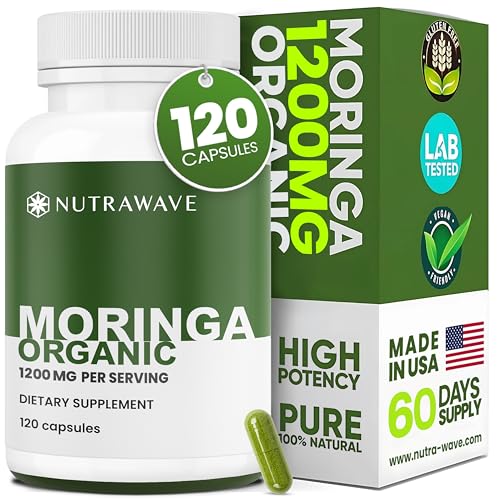
🛒 Where to Buy Moringa (Moringa oleifera)
- CleanseParasites Intra-Cellular Superfood Editor’s Pick
Contains moringa leaf alongside sea moss, bladderwrack, black cumin seed, and other superfood ingredients. - Kuli Kuli Organic Moringa Powder
powder, 1 tsp (3g) — USDA organic, direct-sourced from smallholder farmers across Africa and India - Nature’s Way Moringa Leaf Capsules
capsules, 2 capsules (960mg) — Widely available mainstream supplement brand, whole-leaf capsules - Micro Ingredients Organic Moringa Leaf Powder
powder, 1 tsp (5g) — Budget-friendly bulk organic powder, third-party tested - Zint Moringa Leaf Powder
powder, 1 tbsp (7g) — Sourced from India, popular smoothie-add powder
As an Amazon Associate we earn from qualifying purchases. Quality varies widely — always choose a product with a published third-party test (COA) before buying.
A Note on the Evidence
This evidence base is limited by small trial sizes, short durations, mixed-ingredient formulations in some studies, and reliance on animal data for the largest lipid effects; talk to a doctor before using moringa to manage cholesterol, especially if you take other medications or are pregnant. This is informational, not medical advice.
Frequently Asked Questions
Does moringa lower LDL cholesterol in humans?
Randomized trials in people with type 2 diabetes or prediabetes have reported no clear lipid profile benefit with moringa supplementation [1][2], but a 2025 meta-analysis rated the overall certainty of this evidence as limited [3]. It is not established as a reliable LDL-lowering intervention for the general population.
Is the cholesterol research in healthy people or people with existing conditions?
Much of the clearer human data comes from participants with type 2 diabetes or prediabetes [1][2][12], populations that already have lipid dysregulation. This means findings may not generalize to metabolically healthy adults.
Why do some studies show much bigger cholesterol effects than others?
Some of the most dramatic lipid results come from animal studies, such as hypercholesterolaemic rabbits [4] and broiler chickens [5], which involve different physiology, dosing, and induced disease states than human trials. Preparation type (leaf powder vs. extract vs. polysaccharide fraction) also varies between studies [9], which affects comparability.

Was moringa tested alone or with other supplements in these trials?
Not always alone. One randomized controlled trial combined moringa with garlic (Allium sativum) [6], and another tested a multi-ingredient herbal formulation [7]. In these cases, it’s not possible to attribute lipid changes to moringa specifically.
What is the proposed mechanism for any lipid effect?
Moringa leaves contain polyphenols such as quercetin and chlorogenic acid along with vitamins and minerals; the hypothesized mechanism is antioxidant and mild anti-inflammatory activity rather than a single cholesterol-blocking compound, a pattern also suggested by studies on moringa’s effects on oxidative stress in other tissues [10][11].
Should I take moringa instead of my cholesterol medication?
No. The human evidence is preliminary, inconsistent, and largely limited to people with diabetes-related metabolic conditions [3]. Moringa supplementation should not replace prescribed cholesterol-lowering treatment without talking to a doctor.
References
- C Afiaenyi I et al. Effects of Moringa oleifera leaves on the blood glucose, blood pressure, and lipid profile of type 2 diabetic subjects: A parallel group randomized clinical trial of efficacy. Nutrition and health (2025). PMID 37229639
- Díaz-Prieto LE et al. Effects of Moringa oleifera Lam. Supplementation on Inflammatory and Cardiometabolic Markers in Subjects with Prediabetes. Nutrients (2022). PMID 35565903
- Crișan D et al. Effects of Moringa oleifera Lam. Supplementation on Cardiometabolic Outcomes: A Meta-Analysis of Randomized Controlled Trials with GRADE Assessment. Nutrients (2025). PMID 41305552
- Mehta K et al. Effect of fruits of Moringa oleifera on the lipid profile of normal and hypercholesterolaemic rabbits. Journal of ethnopharmacology (2003). PMID 12738086
- Sukria HA et al. Effects of Moringa oleifera as a Feed Supplement on Performance and Blood Lipid Profiles of Broiler Chicken: A Meta-Analysis. Animal science journal = Nihon chikusan Gakkaiho (2025). PMID 39979556
- Sarfraz A et al. Synergistic effect of Moringa oleifera and Allium sativum on BMI and lipid profile: A randomized controlled trial. Pakistan journal of pharmaceutical sciences (2023). PMID 38008957
- Dixit K et al. Efficacy of a novel herbal formulation for weight loss demonstrated in a 16-week randomized, double-blind, placebo-controlled clinical trial with healthy overweight adults. Diabetes, obesity & metabolism (2018). PMID 29923305
- Zhang T et al. Effects of feeding a Moringa oleifera rachis and twig preparation to dairy cows on their milk production and fatty acid composition, and plasma antioxidants. Journal of the science of food and agriculture (2018). PMID 28665513
- Yang M et al. Recent developments in Moringa oleifera Lam. polysaccharides: A review of the relationship between extraction methods, structural characteristics and functional activities. Food chemistry: X (2022). PMID 35571331
- Ademosun AO et al. Influence of Moringa (Moringa oleifera) enriched ice creams on rats' brain: Exploring the redox and cholinergic systems. Current research in food science (2022). PMID 35198996
- Melebary SJ et al. Impact of Moringa oleifera leaf extract in reducing the effect of lead acetate toxicity in mice. Saudi journal of biological sciences (2023). PMID 36458096
- Alhabeeb MK et al. Comparing the Effect of Moringa Aqueous Extract and Selenium Nanoparticles Against Complications of Type 2 Diabetes Mellitus. Pakistan journal of biological sciences : PJBS (2023). PMID 37859556
These statements have not been evaluated by the Food and Drug Administration. This information is not intended to diagnose, treat, cure, or prevent any disease. Content is for informational purposes only and is not medical advice; consult a qualified healthcare provider before starting any supplement. As an Amazon Associate we earn from qualifying purchases.
